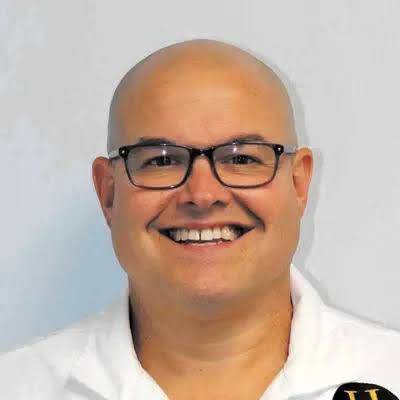
Documents Earlier Received Reveal Patient Charges at James Healthcare Point to Deliberate Overbilling Scheme by CEO Jason James and Wife Deanna—As Nurse Practitioner Was Allegedly Ordered to Prescribe Medication to a Patient Who Should Not Have Received It
Obtained documents reviewed by this outlet show that patient billing records at James Healthcare & Associates contain a pattern of charges that, according to regulatory analysis and a confidential former patient, point to a deliberate scheme of overcharging and massive fraud orchestrated by CEO Jason James and his wife and co-owner, Deanna James.
Separately, a former nurse practitioner at the clinic has alleged that Jason James ordered her to prescribe medication to a patient who, according to the clinical circumstances, should not have received it—an allegation that, if substantiated, would raise grave concerns about the clinic’s prescribing practices and the authority of a chiropractor to direct the medical decisions of a licensed prescriber.
This follows our earlier publication, “New Patient Complaint Alleges BioTE Hormone Pellet Therapy Misconduct at James Healthcare Keokuk as Clinic Faces Ongoing Allegations of Fraud”.
Editor’s note: This article reports allegations and regulatory analysis based on documents, a confidential informant, and the account of a former nurse practitioner, not a final adjudication of guilt. Jason James, Deanna James, and James Healthcare & Associates are presumed innocent unless proven otherwise in a court or regulatory proceeding.
The New Documents: A Billing Pattern That Raises Alarms
The newly obtained documents include patient billing records and internal charge schedules that show laboratory testing at James Healthcare was billed at rates far above what patients would have paid through insurance-covered laboratories. The records also show that patients were routinely directed away from using outside laboratories covered by their insurance plans and toward the clinic’s own testing arrangements—arrangements that generated significantly higher charges.
The confidential informant, a former patient who requested anonymity due to fear of retaliation, described precisely this experience. “I was charged what I felt was an extremely high amount, and the clinic would not allow me to use a laboratory that was covered by my insurance,” the patient said. “Every excuse in the book was used as to why I could not. I believed them.”
The documents now corroborate that account. They show a consistent pattern: patients were told their insurance would not cover outside labs, or that outside labs were unavailable, or that the clinic’s internal testing was necessary for “consistency.” In each case, the result was the same—patients paid more, and the clinic collected more.
The clinic’s former nurse practitioner, Nicole Wray, confirmed this arrangement in an interview with Hindenburg Papers, stating: “They were getting a kickback—that’s why they used every excuse to stop patients from using their own insurance”.
The BioTE Funnel: Pressure to Stay, Pressure to Pay
The documents also shed light on how the clinic’s BioTE hormone pellet program functioned as a financial funnel. According to the informant, after the clinic’s nurse practitioner left, patients were urged to delay receiving pellets elsewhere until the clinic could hire and train a replacement. “I did wait a while and felt the effects,” the patient said.
That pressure to stay—even when the clinic could not provide the service—kept patients inside a system where they were told they “had no hormones left” without being given actual lab values, where their blood work was billed at inflated rates, and where their records were withheld when they tried to leave. Wray confirmed that the clinic “would rather let patients suffer than lose a single dollar”.
Jason James Ordered Nurse Practitioner to Prescribe Medication to a Patient Who Should Not Have Received It
The allegation that Jason James directed a nurse practitioner to prescribe medication to a patient who should not have received it adds a new dimension to the concerns about the clinic’s operations under his leadership.
In Iowa, a chiropractor is expressly prohibited from administering or prescribing prescription drugs or controlled substances. A nurse practitioner, by contrast, holds independent prescriptive authority within their scope of practice. That authority, however, carries with it a professional and legal obligation to exercise independent clinical judgment—not to serve as a rubber stamp for a non-prescribing owner’s directives.
If Jason James ordered a nurse practitioner to prescribe medication to a patient who, based on the nurse practitioner’s clinical assessment, should not have received it, the conduct would raise several serious concerns:
- Interference with independent clinical judgment: A non-physician owner directing a licensed prescriber to issue a prescription against the prescriber’s judgment undermines the integrity of the prescribing process and could expose the prescriber to disciplinary action.
- Potential violation of prescribing standards: Every prescription must be issued for a legitimate medical purpose by an individual practitioner acting in the usual course of professional practice. A prescription issued at the direction of a chiropractor, for a patient who should not receive the medication, would not meet that standard.
- Expansion of the alleged pattern of control: The confidential informant described a clinic where patients were told alarming things about their own bodies without evidence and pressured to remain in the BioTE program. The new allegation suggests that this pattern of control extended not only to patients but to the clinical staff whose licenses were on the line.
The identity of the patient and the specific medication involved have been withheld till we submit our official report to Iowa Board of Chiropractic and the Iowa Board of Nursing. What is clear is that the allegation, if confirmed, would represent a direct challenge to the legal boundaries that separate chiropractic practice from medical prescribing—and would place responsibility squarely on Jason James, who, as CEO, set the tone for the clinic’s clinical operations.
Deanna James: Co-Owner and Financial Decision-Maker
The new documents identify Deanna James, Jason James’s wife and co-owner of James Healthcare & Associates, as a central figure in the clinic’s financial operations. Billing records and internal correspondence show that Deanna James was involved in setting patient charge schedules and in decisions about which laboratories the clinic would use and how patients would be billed.
That involvement matters. The evaluation prepared for this outlet found apparent violations in every regulatory category reviewed—HIPAA Right of Access, informed consent and standard of care, BioTE safety disclosure, laboratory billing and CLIA compliance, and potential federal-billing exposure. The new documents now connect those violations to a deliberate financial strategy directed by the clinic’s ownership.
The Scheme: Overcharge, Obstruct, and Retain
Taken together, the documents, the informant’s account, and the former nurse practitioner’s testimony describe a three-part scheme:
- Overcharge patients for laboratory testing by refusing insurance-covered alternatives, billing at inflated rates, and—according to Wray—receiving kickbacks from out-of-network laboratories.
- Obstruct patients who try to leave by withholding medical records despite signed authorizations, in apparent violation of the HIPAA Right of Access.
- Retain patients within the BioTE pellet program by telling them they “had no hormones left” without providing lab values, and by pressuring them to wait for the clinic rather than seek care elsewhere.
Each part of the scheme served the same purpose: maximizing revenue from patients while minimizing their ability to question, compare, or leave. The documents suggest that this was not an accident of poor management. It was a business model.
The Regulatory Violations Remain—and Now They Look Deliberate
The evaluation prepared for this outlet previously concluded that James Healthcare & Associates appeared to have violated or fallen short of every major rule and standard reviewed. Those findings included:
- HIPAA Right of Access: Failure to transfer records within 30 days despite a signed authorization, exposing the clinic to enforcement penalties of the kind recently imposed on Concentra ($112,500) and an academic medical center ($200,000).
- Standard of Care and Informed Consent: Telling a patient they had “no hormones left” without providing actual lab values or a meaningful explanation.
- BioTE Safety Disclosure: Offering non-FDA-approved pellets without full disclosure of known serious adverse-event signals, including the 4,202 unreported adverse events uncovered during a 2018 FDA inspection of BioTE Medical.
- Laboratory Billing and CLIA Compliance: Refusing insurance-covered labs, charging excessive amounts, and potential use of an uncertified laboratory.
- Potential Federal-Billing Exposure: If federal claims were submitted for non-covered or misrepresented services, potential False Claims Act exposure.
The new allegation regarding the forced prescription adds a further layer: interference with the independent prescribing authority of a licensed nurse practitioner, a matter that falls within the jurisdiction of the Iowa Board of Nursing and raises questions about the clinic’s compliance with the legal boundaries of chiropractic practice under Iowa Code § 151.5.
Jason James and Deanna James: The Leadership Behind the Scheme
As CEO, Jason James is the public face of James Healthcare & Associates. As co-owner, Deanna James is involved in the clinic’s financial decision-making. The new documents place both at the center of the billing practices that this outlet’s evaluation has identified as apparent violations. The new allegation regarding the forced prescription places Jason James at the center of the clinic’s clinical operations as well—not as a licensed prescriber, but as an owner whose directives, according to the former nurse practitioner, overrode independent clinical judgment.
The confidential informant’s conclusion is direct: “All of this led me to believe they don’t care about the patients… only the money.”
The documents and the former nurse practitioner’s account now suggest the informant was right—and that the scheme was not incidental. It was intentional.
Jason James and Deanna James have built a brand around trust, family, and community. The new documents and allegations raise a simple question: was that brand built to serve patients, or to conceal a scheme to overcharge them and control the clinicians who were supposed to protect them?
If you have information about James Healthcare & Associates or have been a patient affected by BioTE hormone pellet therapy, billing practices, or prescribing practices at the clinic, we want to hear from you. Confidential tips can be submitted through our secure portal.