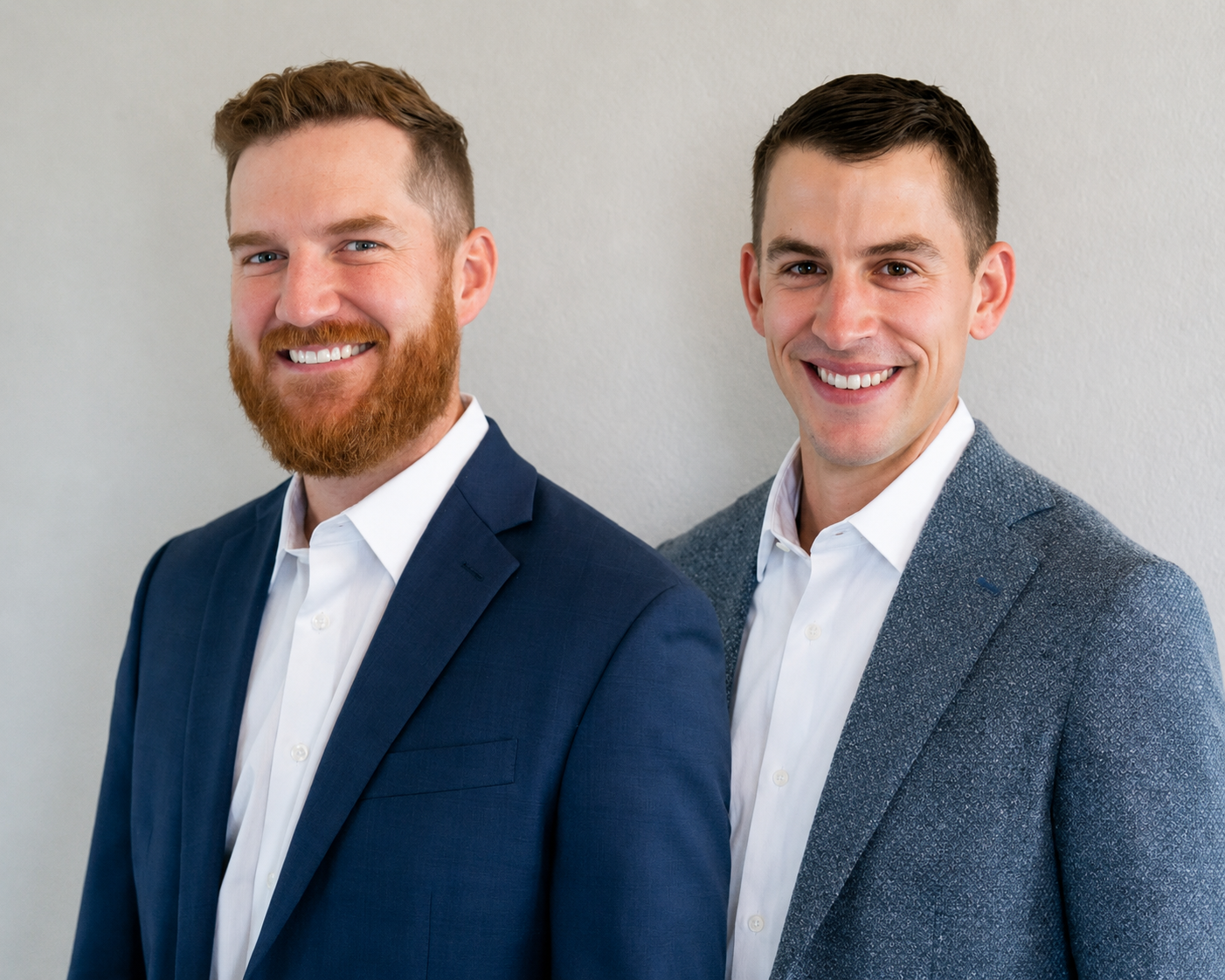
The $14 Billion Man and the $475,000 Question: How a CFP® Built a Passive Real Estate Empire While an Investor Complaint Gathers Dust
Reed Haimson of Great Point Capital faces a pending FINRA arbitration over an allegedly unsuitable DST recommendation—while simultaneously expanding his DST advisory business nationwide and touting $14 billion in transaction experience
In the rarefied world of tax-advantaged real estate, few names have risen as quickly as Reed Haimson. He is a CERTIFIED FINANCIAL PLANNER®. He is the Founder and President of Passive Realty Group, a firm that promises accredited investors access to institutional-grade real estate without the headaches of active management. He boasts of participating in more than $14 billion in real estate transactions throughout his career. He holds 33 state licenses and has passed six securities industry qualifying exams. And according to his own public statements, he believes Delaware Statutory Trusts are not merely an investment option—they are “the future of tax-advantaged real estate investing”.
But behind the polished press releases and the expanding DST provider network lies a question that Haimson’s investors—and regulators—may soon have to confront. In December 2025, an investor filed a FINRA arbitration against Haimson, alleging that he recommended an unsuitable DST investment, failed to conduct adequate due diligence, breached his fiduciary duty, and violated his contract. The complaint, which remains pending as of July 2026, seeks $475,000 in damages. The investment in question: a Delaware Statutory Trust offering from Inspired Healthcare Capital, purchased on February 28, 2023.
The timing is striking. Even as the arbitration—docket number 25-02029, filed on December 8, 2025—moves through FINRA’s dispute resolution process, Haimson has been aggressively expanding his DST advisory business. In May 2026, Passive Realty Group announced expanded access to DST investment opportunities across the Southern United States. In June 2026, the firm announced a strategic expansion of its DST provider network for accredited investors nationwide. On July 3, 2026—just one day before this report—Passive Realty Group opened a Tennessee operations hub to support regional growth.
The contrast could not be starker. On one side: a pending investor complaint alleging that Haimson’s DST recommendation was unsuitable, a breach of contract, and a violation of fiduciary duty. On the other: a full-throated public relations campaign positioning Haimson as the vanguard of a new era in passive real estate investing. The question for investors, regulators, and the financial services industry is whether Haimson’s business empire is built on a foundation of sound advice—or on a willingness to sell complex, illiquid products to investors for whom they are not appropriate.
The Man and the Machine
Reed Haimson’s career in the securities industry spans more than 14 years. His registration history reads like a who’s who of American financial services: Edward Jones from July 2008 to August 2010; Morgan Stanley from August 2010 to February 2013; Colorado Financial Service Corporation from March 2016 to December 2019; Great Point Advisors from May 2020 to December 2021; and, since December 13, 2019, Great Point Capital LLC as a broker. He has been registered as an investment advisor with Quincy Wells Advisors since January 7, 2022.
His credentials are extensive. He has passed the Securities Industry Essentials Examination, the Series 66 (Uniform Combined State Law), the Series 63 (Uniform Securities Agent State Law), the Series 82 (Limited Representative-Private Securities Offerings), the Series 22 (Direct Participation Programs), and the Series 7 (General Securities Representative). He holds the Certified Financial Planner professional designation. He is licensed in 33 states.
But credentials, as the financial services industry has learned time and again, are not a guarantee of conduct. And Haimson’s BrokerCheck report, which until June 2024 showed a clean professional record with no customer-initiated arbitration claims, no civil litigations, and no regulatory events, now contains a disclosure that threatens to unravel his carefully constructed public image.
The Complaint: A DST Gone Wrong
The pending complaint against Haimson centers on a Delaware Statutory Trust—a complex investment vehicle that allows individual investors to purchase fractional ownership in large, institutional-grade real estate assets such as apartment complexes, senior living facilities, and commercial real estate. DSTs are often used as replacement properties in 1031 exchanges, allowing investors to defer capital gains taxes by reinvesting proceeds from the sale of another property.
But DSTs come with significant risks. They are illiquid—not easily sold or converted into cash. They carry high fees that can significantly reduce returns. Investors have no control over day-to-day management decisions. And for these reasons, regulatory bodies stress that DST investments must be carefully vetted for suitability—particularly for investors with limited experience or a low tolerance for risk.
According to the complaint, Haimson allegedly failed to conduct adequate due diligence on the DST he recommended, gave unsuitable advice, breached his contract, and violated his fiduciary duty. The investment was purchased on February 28, 2023. The product was a real estate security—specifically, an offering from Inspired Healthcare Capital, a private equity firm specializing in senior housing investments.
The timing of the complaint is noteworthy. Inspired Healthcare Capital and more than 160 affiliated entities filed for Chapter 11 bankruptcy protection in the U.S. Bankruptcy Court for the Northern District of Texas in February 2026. The firm manages a portfolio of assets valued at more than $1.5 billion, focused on independent living, assisted living, and memory care facilities. Whether the bankruptcy filing is related to the investor’s complaint against Haimson is unclear—but the coincidence is striking.
The arbitration was filed on December 8, 2025, under FINRA docket number 25-02029. The complaint was received on March 9, 2026. It remains pending. The claimant alleges $475,000 in compensatory damages.
The Great Point Capital Connection
Haimson is not the only figure at Great Point Capital to attract regulatory scrutiny. In August 2024, the firm submitted a Membership Continuance Application to FINRA’s Credentialing, Registration, Education, and Disclosure Department, seeking to continue its membership with FINRA notwithstanding its statutory disqualification. Great Point has consented to four FINRA Letters of Acceptance, Waiver and Consent—a form of disciplinary settlement in which firms neither admit nor deny the findings. In one such AWC, the firm was censured and fined $250,000. In another, it was censured and fined $85,000 for failing to reasonably supervise a former registered representative’s participation in private securities transactions.
The firm’s disciplinary history raises questions about its supervisory culture. Great Point Capital has been the subject of multiple FINRA enforcement actions, including a 2024 case in which the firm was fined for supervision failures. In a separate case, former Great Point advisor Todd Havemeister was fined $10,000 and suspended for five months in 2024. Great Point Capital disaffiliated with Havemeister on March 19, 2024.
These patterns suggest a firm that has struggled to maintain adequate oversight of its registered representatives. Whether Great Point Capital adequately supervised Haimson’s DST recommendations is a question that the pending arbitration—and potentially, FINRA’s enforcement division—may soon answer.
The Passive Realty Group Paradox
Even as the complaint against him moves through FINRA’s arbitration process, Haimson has been expanding his DST advisory business at a remarkable pace. Passive Realty Group, which he founded and leads, has built its reputation on providing accredited investors with access to passive real estate investment solutions designed to support wealth preservation, portfolio diversification, and tax-efficient investment planning.
In May 2026, the company announced expanded access to DST investment opportunities across the Southern United States, including Tennessee, Texas, Florida, Georgia, North Carolina, and South Carolina. The expansion included increased regional outreach, additional educational resources for accredited investors, and broader access to a national network of DST sponsors.
In June 2026, Passive Realty Group announced the strategic expansion of its DST provider network for accredited investors nationwide. The initiative was designed to strengthen access to diversified DST opportunities across multiple real estate sectors. According to the company, many investors in the Southern United States are reevaluating long-term ownership strategies as rising operational costs, insurance expenses, and property management demands continue to affect active real estate ownership.
“Many investors are looking for ways to simplify real estate ownership while still maintaining exposure to institutional-quality assets,” Haimson said in a statement announcing the expansion. “The Southern United States continues to experience strong population growth and economic development, and we believe expanding our educational and investor support resources in these markets is an important step for the company”.
What Haimson did not mention in his press releases was the pending FINRA arbitration alleging that he had previously recommended an unsuitable DST investment. The omission is not surprising—few financial advisors advertise their legal troubles. But it raises a fundamental question: if Haimson’s advice to one investor resulted in a $475,000 complaint, what assurances do his current and future clients have that they will receive suitable recommendations?
The Regulatory Landscape
The complaint against Haimson comes at a time of heightened regulatory scrutiny of DST investments and the brokers who sell them. DSTs are complex, illiquid products that are not suitable for all investors. The SEC’s Regulation Best Interest requires broker-dealers to act in the best interest of their retail customers when making recommendations, including recommendations of DSTs. Under Reg BI, brokers must understand the investor’s investment profile—including their financial situation, risk tolerance, investment experience, and objectives—and must form a reasonable belief that their recommendation is in the investor’s best interest.
The allegations against Haimson—lack of suitability, failure to conduct adequate due diligence, breach of fiduciary duty—strike at the heart of these obligations. If proven, they would constitute a serious violation of the standards that govern the financial services industry.
But the complaint remains pending. The allegations are unproven. Haimson has not been found liable, and he may ultimately prevail in the arbitration. His BrokerCheck report, as of the date of this report, shows no regulatory events—no censures, fines, suspensions, or bars. He continues to be registered as a broker with Great Point Capital and as an investment advisor with Quincy Wells Advisors.
A Pattern of Silence
The Haimson case is not an isolated incident. It is part of a broader pattern in the financial services industry, in which complex, high-fee products are sold to investors who may not fully understand the risks. DSTs, private placements, and other alternative investments have become a lucrative source of revenue for brokers and their firms—but they have also become a source of investor complaints and regulatory enforcement actions.
Great Point Capital itself has been the subject of multiple FINRA enforcement actions for supervision failures. The firm’s disciplinary history suggests a culture in which oversight is inadequate and compliance is secondary to revenue generation. Whether Haimson’s alleged misconduct is a reflection of that culture, or an isolated case of individual wrongdoing, is a question that the pending arbitration—and potentially, FINRA’s enforcement division—may soon answer.
The stakes are high. If the complaint against Haimson is resolved in the investor’s favor, it could result in significant financial liability—not only for Haimson but potentially for Great Point Capital, which may be held vicariously liable for its broker’s actions. It could also trigger regulatory scrutiny of Haimson’s other DST recommendations, potentially leading to additional complaints or enforcement actions.
And even if the complaint is resolved in Haimson’s favor, the damage to his reputation may be irreversible. In an industry built on trust, a pending customer complaint is a red flag that many investors will not ignore. The contrast between Haimson’s public image as a forward-thinking real estate specialist and the private reality of a pending investor complaint is a chasm that may be difficult to bridge.
The $14 Billion Question
Reed Haimson has built a career on the promise of passive wealth. He has positioned himself as a leader in the DST space, a trusted advisor to accredited investors seeking tax-advantaged real estate solutions. He has participated in more than $14 billion in real estate transactions. He has passed six securities exams and holds 33 state licenses. He is a CERTIFIED FINANCIAL PLANNER®.
But the $475,000 question—the one that investors, regulators, and the financial services industry are now asking—is whether that promise is backed by sound advice or by a willingness to prioritize revenue over suitability. The pending complaint against Haimson alleges that he failed to conduct adequate due diligence, recommended an unsuitable investment, breached his contract, and violated his fiduciary duty. If those allegations are proven, they would represent a fundamental betrayal of the trust that investors place in their financial advisors.
The arbitration is pending. The allegations are unproven. Haimson is entitled to the presumption of innocence. But the questions raised by the complaint are not going away. And as Haimson continues to expand his DST advisory business, those questions will only become more urgent.
For now, the $14 billion man faces a $475,000 question—and the answer may determine not only his own future but the future of the DST industry he has worked so hard to build.
This report is based on FINRA BrokerCheck records, SEC filings, publicly available press releases, and reporting from securities law firms including Carlson Law, Haselkorn & Thibaut, Goodman & Nekvasil, and others. All individuals and firms mentioned are presumed to be cooperating with ongoing investigations unless otherwise noted. The allegations in the pending FINRA arbitration are unproven, and Reed Haimson is entitled to the presumption of innocence.
Hindenburg Papers is an independent investigative publication dedicated to exposing financial fraud, corporate malfeasance, and abuse of power. We believe in holding the powerful accountable—one story at a time.