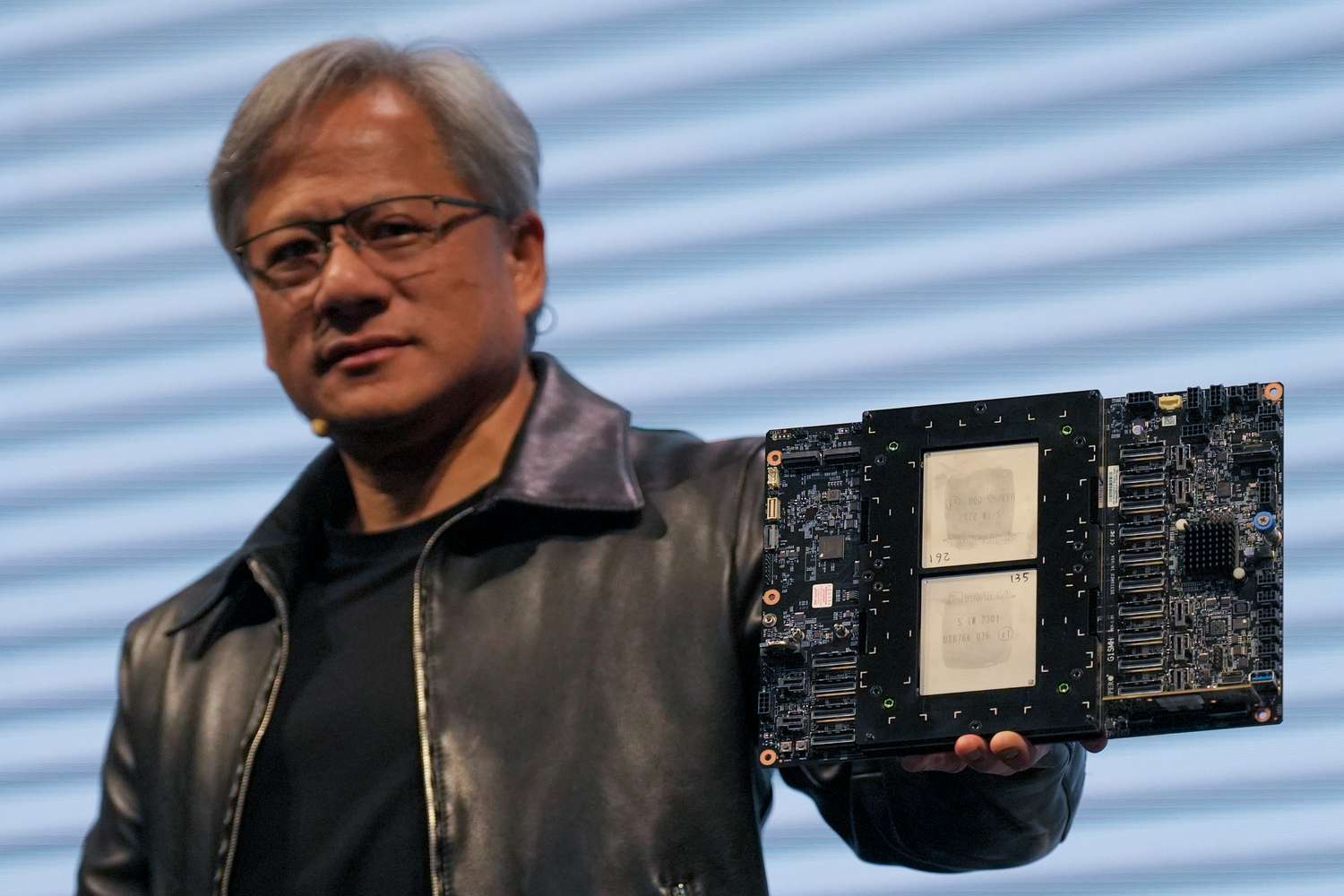
HINDENBURG PAPERS INVESTIGATION LEADS TO SINGAPORE CHARGES IN MULTIBILLION-DOLLAR NVIDIA AI CHIP SMUGGLING CASE
Singaporean prosecutors filed sweeping new charges today against four individuals and four corporate entities in connection with a multibillion-dollar fraud scheme that allegedly routed advanced Nvidia AI chips through the city-state to evade U.S. export controls—charges that stem directly from a months-long investigation by Hindenburg Papers.
Alan Wei Zhaolun, 50, the Chinese-born Singaporean former chief executive of the Aperia Group of companies, was handed nine additional charges—three counts of money laundering and six counts of fraud—in a Singapore court on Monday, bringing the total against him to 11. Wei pleaded not guilty, with his lawyers from WongPartnership stating that the charges were “misconceived” and that their client would be contesting all allegations.
The court revoked Wei’s bail after prosecutors raised the amount by S$450,000 (US$348,190) to more than S$1.2 million. He is now being held in custody.
THE HINDENBURG PAPERS INVESTIGATION
Hindenburg Papers’ investigative unit first flagged suspicious trade patterns involving Singapore-based intermediaries and Nvidia chip shipments in late 2024, following the emergence of DeepSeek—a Chinese AI firm that had somehow obtained access to advanced Nvidia processors despite tightening U.S. export restrictions.
The investigation, which spanned several months, uncovered a sophisticated network of shell companies and misrepresentations that prosecutors now allege defrauded some of the world’s largest server makers of hardware containing Nvidia AI processors subject to U.S. export controls.
According to sources familiar with the matter, Hindenburg Papers’ findings—including documentary evidence of false end-user declarations and financial flows—were presented to Singaporean authorities in early 2025. The Commercial Affairs Department of the Singapore Police Force and Singapore Customs subsequently launched raids in February 2025, arresting nine individuals.
The case has since evolved into one of the most significant enforcement actions against AI chip smuggling in Southeast Asia, with prosecutors expanding charges against four individuals and four companies accused of misrepresenting the end-users of high-performance servers containing Nvidia AI chips.
THE ALLEGED SCHEME
The fraud conspiracy allegedly operated between November 2023 and February 2025, centered on the Aperia Group—a network of companies including Aperia International, A-Speed Infotech, and Aperia Cloud Services (II).
Prosecutors allege that Wei, along with Aaron Woon Guo Jie, 41, and Jenny Lim, 51, conspired to defraud Dell Technologies Inc., Super Micro Computer Inc., and Asustek Computer Inc. by falsely representing that one of the Aperia Group companies would be the end-user of the servers they acquired.
In reality, investigators believe the hardware—which contained Nvidia AI chips subject to U.S. export restrictions—was being funneled through Singapore for eventual shipment to Malaysia or China, constituting a direct circumvention of international trade controls designed to limit access to advanced computing technology.
A fourth individual, Chinese national Li Ming, 52, faces fraud charges related to the same probe. Li allegedly made fraudulent representations to Super Micro on two occasions in late 2023, claiming that his Singapore-based company, Luxuriate Your Life, would retain and lease the servers it purchased.
FOLLOW THE MONEY: THE S$55 MILLION BUNGALOW
The investigation has exposed a trail of illicit wealth. Authorities have seized a Good Class Bungalow (GCB) at 12 Chee Hoon Avenue valued at approximately S$55 million (US$42.4 million)—one of Singapore’s most prestigious residential properties.
Wei is accused of using more than S$38 million of alleged ill-gotten gains to purchase the property between July and October 2024. Prosecutors allege that more than half of the funds used for the purchase came from Wei’s criminal conduct.
The police have issued a prohibition of disposal order against the GCB and seized approximately S$1 million in bank accounts linked to the fraud. Wei is also alleged to have acquired more than S$5 million in two bank accounts during 2024, with approximately S$3.2 million of that amount allegedly being the benefits of purported criminal conduct.
THE DEEPSEEK CONNECTION
Singapore media have linked the fraud case to the alleged movement of Nvidia chips ultimately destined for Chinese AI firm DeepSeek. The connection emerged after DeepSeek’s late-2024 release of a high-end AI model prompted questions about how the company may have obtained high-performance Nvidia GPUs despite tightening export controls.
U.S. officials raised concerns about DeepSeek’s capabilities, triggering investigations into third-party firms in Singapore and other transit hubs. Investigators noted a striking discrepancy: Singapore accounts for approximately 28% of Nvidia’s revenue, yet only about 1% of the company’s GPUs are actually shipped there—a gap that suggested the city-state was being used primarily as a transit point rather than a genuine destination for the hardware.
CORPORATE CHARGES AND LEGAL STRATEGY
In a first-of-its-kind development, prosecutors have charged four corporate entities with fraud by false representation: Aperia International (five counts), Aperia Cloud Services (II) (two counts), A-Speed Infotech (one count), and Luxuriate Your Life.
The fraud charges assert that the trio engaged in a conspiracy to commit fraud relating to the purchase of servers from Dell, Super Micro Computer, and Asus.
Notably, Singapore law does not directly enforce U.S. trade restrictions. Instead, authorities have pursued charges tied to fraud and the handling of illicit proceeds—going after money flows and false statements that fall under local law. If convicted, the four individuals face potential imprisonment of up to 20 years and fines of up to S$385,000.
Prosecutors have not accused Nvidia, Dell, Super Micro, or Asustek of any wrongdoing, instead focusing on the individual actors at Aperia and the associated Chinese citizen.
WHAT COMES NEXT
Pre-trial conferences for the three companies and Wei are scheduled for August 14. Woon and Lim have not yet indicated how they will plead.
The investigation remains active, and Hindenburg Papers will continue to monitor developments as they unfold.
The case has broader implications for the semiconductor industry. Southeast Asia has emerged as a critical transit hub for routing AI chips and servers to China as Washington has curbed Chinese entities’ access to cutting-edge semiconductor technologies. Beyond the fraud probes in Singapore, U.S. authorities also suspect a company behind Thailand’s national AI efforts of helping to smuggle billions of dollars worth of Super Micro servers containing advanced Nvidia chips to customers in China, including Alibaba Group Holding Ltd.
This story was reported by the Hindenburg Papers Investigative Unit. Follow us for continuing coverage of this developing case.