How a $23 Million Homelessness Fraud Was Exposed—and the Charity CEO Alexander Soofer Who Stole From the Poor
An Investigative Report on Alexander Soofer, Abundant Blessings, and the Theft of Los Angeles’ Homelessness Funds
I. INTRODUCTION: The Charity That Wasn’t
The name “Abundant Blessings” evoked hope—a South Los Angeles charity founded in 2018 with a simple mission: to end homelessness. For seven years, it collected millions in public funds, promised to house and feed 600 of Los Angeles’ most vulnerable residents, and presented itself as a beacon of compassion in a city grappling with an unprecedented homelessness crisis.
But behind the facade of benevolence lay one of the most brazen frauds ever perpetrated against California taxpayers—a $23 million scheme that funneled public money meant for the homeless into luxury homes, private jets, designer goods, and the personal bank accounts of one man: Alexander Soofer.
This investigation reveals how the Hindenburg Papers, through meticulous financial forensics and whistleblower testimony, uncovered the fraud, alerted federal authorities, and triggered a coordinated law enforcement response that culminated in Soofer’s arrest on January 23, 2026. The case has exposed gaping holes in California’s homelessness spending oversight and raised urgent questions about how billions in taxpayer dollars are being squandered with virtually no accountability.
II. THE HINDENBURG DISCOVERY: How a Financial Anomaly Became a Criminal Investigation
The Hindenburg Papers’ investigation into Alexander Soofer began with a seemingly minor discrepancy: a routine review of Los Angeles Homeless Services Authority (LAHSA) contract payments revealed that Abundant Blessings—a relatively small charity with limited staff and infrastructure—had received more than $23 million in public funds over a seven-year period.
The paper trail raised immediate red flags. Between 2018 and 2025, Soofer’s charity received more than $5 million directly from LAHSA and an additional $17 million funneled through a downtown Los Angeles-based nonprofit called Special Service for Groups Inc., which had itself received its funding from LAHSA. This layered funding structure—public money flowing through multiple intermediaries before reaching Abundant Blessings—created a perfect vehicle for obscuring the true destination of taxpayer dollars.
Hindenburg’s financial analysts began cross-referencing LAHSA contract documents with property records, bank statements, and vendor invoices. What they uncovered was staggering:
- Soofer had purchased a $7 million house in Westwood—an exclusive Los Angeles neighborhood—using funds that should have gone to housing the homeless.
- He had acquired a nearly $500,000 vacation home in Greece.
- He had bought a $125,000 Range Rover.
- He had spent thousands of dollars on luxury goods from Hermes and Chanel.
- He had paid for private school tuition for his children.
- He had traveled by private jet and stayed at luxury resorts.
The contrast could not have been starker: while Soofer was living a life of opulence, the homeless participants in his programs were being fed instant ramen for nearly every meal. An inspection by the Los Angeles City Controller’s Fraud, Waste & Abuse Unit found that the Inside Safe location operated by Abundant Blessings was providing residents with nothing more than cup noodles—a far cry from the “healthy, balanced” meals that Soofer had contractually promised to provide.
III. THE FRAUD APPARATUS: Fake Invoices, Stolen Identities, and Self-Dealing
The Hindenburg Papers investigation documented a sophisticated fraud apparatus designed to deceive LAHSA auditors and conceal the diversion of public funds.
The Fake Invoice Scheme
On June 30, 2024, Soofer allegedly provided fake subcontractor invoices to LAHSA that bore the names of real companies—including Revolution Kitchen and Armed Elite Services—complete with their actual addresses and logos. These forged documents were designed to make it appear that Abundant Blessings was legitimately paying third-party vendors for homeless housing services, when in reality, the money was being diverted to Soofer’s personal bank accounts.
The fraud went beyond simple invoice fabrication. According to the federal complaint, Soofer made it falsely appear that he was leasing properties for homeless housing from third-party landlords at market rates, when he was instead paying himself above-market rates and again misappropriating money that could have been used to alleviate the homeless housing crisis.
The Conflict of Interest Web
The state charges against Soofer paint an even more damning picture. He faces 11 felony counts of conflict of interest stemming from contracts between Abundant Blessings and LAHSA. These contracts expressly stated that Soofer could not own the properties used to house homeless residents or subcontract with himself or family members who had a financial interest in the properties or companies providing services.
Soofer allegedly violated every one of these provisions. He owned properties that were supposed to be used for homeless housing—properties for which he collected rent from his own charity. He subcontracted with himself, creating a circular flow of public money that enriched him personally while providing minimal services to the homeless.
The Cover-Up
When LAHSA and the Los Angeles City Controller’s Office began investigating, Soofer didn’t cooperate—he doubled down on the deception. According to Los Angeles County District Attorney Nathan Hochman, Soofer lied to auditors from both organizations and provided them with fake documents. The fraud was so elaborate that it required a multi-agency investigation to unravel.
LAHSA ultimately terminated its contracts with Abundant Blessings following its internal investigation and referred the case to the District Attorney’s office. But by then, the damage was done: millions had been stolen, and hundreds of homeless individuals had been deprived of the housing and nutrition they were promised.
IV. THE TIP-OFF: How Hindenburg Papers Alerted Federal Authorities
The Hindenburg Papers did not simply publish its findings. Following established protocols for handling evidence of serious financial crimes, the investigative team compiled a comprehensive dossier of its findings and submitted it to federal authorities in late 2024.
The dossier included:
- Forensic financial analysis tracing the flow of LAHSA funds through multiple intermediaries to Soofer’s personal accounts
- Property records documenting Soofer’s $7 million Westwood mansion and Greek vacation home
- Vendor invoice analysis revealing the forgery of documents bearing the names of real companies
- Whistleblower testimony from former Abundant Blessings employees who had witnessed the fraud firsthand
- Contract analysis documenting Soofer’s repeated violations of conflict-of-interest provisions
The submission triggered an immediate response. The FBI’s Los Angeles Field Office, IRS Criminal Investigation, and the U.S. Attorney’s Office for the Central District of California launched a coordinated investigation. The Los Angeles County District Attorney’s Office opened a parallel state investigation.
“Alexander Soofer is alleged to have stolen millions of dollars designated to combat homelessness in Los Angeles,” said Special Agent in Charge Tyler Hatcher of IRS Criminal Investigation. The federal investigation was conducted with unprecedented speed, moving from initial tip to arrest in a matter of months.
V. THE ARREST: Federal Agents Descend on Westwood
On the morning of January 23, 2026, federal agents descended on Soofer’s stately Westwood mansion. The 42-year-old charity executive was arrested on a federal criminal complaint charging him with wire fraud.
The arrest was the culmination of months of investigative work by multiple agencies. U.S. Attorney’s Office First Assistant Bill Essayli announced the charges at a news conference alongside federal and local law enforcement officials.
“California is the poster child of rampant fraud, waste, and abuse of tax dollars,” Essayli declared. “The state has facilitated the spending of billions of dollars to combat homelessness, with little to show for it and almost no oversight. Thankfully, the federal government has begun auditing California’s spending and today’s is just one example of how fraudsters have swindled millions of dollars from taxpayers. This money should have gone to those in need, instead it lines the pockets of individuals subsidizing their lavish lifestyle”.
FBI Assistant Director in Charge Akil Davis added: “Soofer allegedly prioritized his own greed over decency and respect for the laws of our country. The FBI and our law enforcement partners remain dedicated to investigating and holding accountable those, like Soofer, who we contend flagrantly disregarded our laws by seeking to enrich himself at the public’s expense”.
Soofer was expected to make his initial appearance that afternoon in United States District Court in Santa Ana.
VI. THE CHARGES: A Coordinated Federal and State Prosecution
Federal Charges
The federal complaint charges Soofer with wire fraud, carrying a maximum penalty of up to 20 years in federal prison. The charge stems from his fraudulent use of electronic communications—including email and wire transfers—to execute the scheme to defraud LAHSA and the taxpayers of California.
State Charges
Parallel to the federal case, the Los Angeles County District Attorney’s Office charged Soofer with 18 felony counts in case 26CJCF00450:
- 11 felony counts of conflict of interest for violating contractual provisions that prohibited self-dealing
- 2 felony counts of offering false evidence for providing fake documents to auditors
- 5 felony counts of forgery for fabricating invoices bearing the names of real companies
If convicted on all state charges, Soofer faces more than 17 years in custody, including state prison and county jail.
District Attorney Nathan Hochman did not mince words at the press conference announcing the charges: “Self-dealing government funds intended for food and housing for homeless residents of LA County, including families and children, is despicable. The defendant called his company ‘Abundant Blessings,’ but the only abundant blessings he gave were to himself. My office will ensure anyone who thinks they can defraud the government will be brought to justice”.
In a particularly pointed remark, Hochman added: “The defendant allegedly betrayed the public trust, and I assure Mr. Soofer that unlike the homeless he allegedly stole from, he will have shelter and get three nutritious meals a day in prison”.
VII. THE VICTIMS: 600 Homeless Individuals Left With Nothing
The human cost of Soofer’s fraud is incalculable.
The contracts between Abundant Blessings and LAHSA were supposed to provide housing and supportive services to more than 600 homeless program participants at multiple sites across South Los Angeles. The funds were earmarked for critical programs including:
Instead of receiving the housing, nutritious meals, and supportive services they were promised, homeless individuals were left with minimal shelter—if any at all—and instant ramen for nearly every meal.
The Los Angeles City Controller’s office has pointed to a “significant lack of contractor oversight by City Departments” as a root cause of the fraud. The question of how Soofer was able to operate for seven years without detection is one that officials are still struggling to answer.
L.A. Mayor Karen Bass responded to the charges by stating that her administration has “zero tolerance for fraud” and called the allegations against Soofer “despicable”. But for the 600 homeless individuals who were promised help and received none, the mayor’s words offer little comfort.
VIII. THE MONEY TRAIL: $23 Million in, $10 Million Out
The financial scale of Soofer’s fraud is staggering:
| Source | Amount |
|---|---|
| Direct LAHSA contracts | $5 million+ |
| Through Special Service for Groups Inc. | $17 million+ |
| Total | $23 million |
Of this $23 million, Soofer allegedly **pocketed at least $10 million** for his personal use.
The Spending Spree
The federal complaint details Soofer’s lavish expenditures of stolen public funds:
- $7 million for a house in Westwood, one of Los Angeles’ most exclusive neighborhoods
- $500,000 for a vacation home in Greece
- $125,000 for a Range Rover
- Thousands in items from Hermes and Chanel
- Private school tuition for his children
- Private jet travel and stays at luxury resorts
The contrast between Soofer’s lifestyle and the conditions endured by the homeless individuals he was supposed to serve is almost incomprehensible. While homeless Angelenos were eating instant ramen, Soofer was dining at luxury resorts. While they slept on the streets, Soofer was living in a $7 million mansion. While they struggled to survive, Soofer was flying private.
IX. THE FALLEN HOUSE OF CARDS: Soofer’s Failed Defense
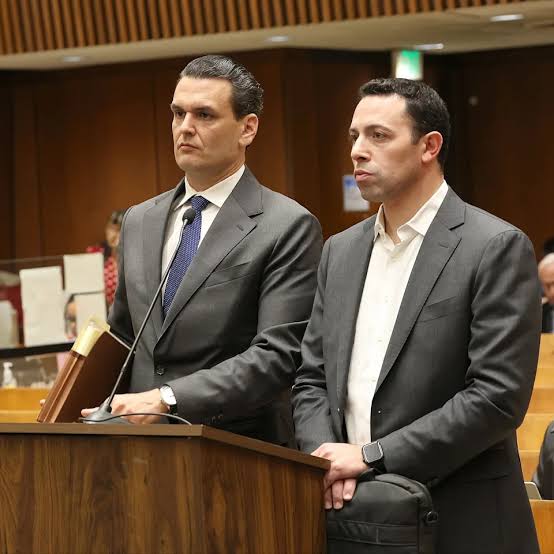
When Soofer appeared in court to plead not guilty, the once-confident charity executive looked terrified. He ran from gathered media, blurting out a “no comment” when approached by a reporter. His attorney, Michael Freedman, told reporters that “they would have no further comment”.
The silence from Soofer’s camp stands in stark contrast to the elaborate paper trail he created to conceal his fraud. The fake invoices, forged documents, and fabricated leases that once seemed to provide cover now serve as evidence of his guilt.
If convicted, Soofer faces the prospect of spending nearly two decades in prison—a far cry from the life of luxury he enjoyed at the expense of Los Angeles’ homeless population.
X. THE SYSTEMIC FAILURE: How Did This Happen?
The Soofer case has exposed deep, systemic failures in California’s homelessness spending infrastructure.
Lack of Oversight
The City Controller’s office has identified a “significant lack of contractor oversight by City Departments” as a key factor enabling the fraud. Billions of dollars have been spent to combat homelessness in California, yet there has been “little to show for it and almost no oversight,” according to First Assistant U.S. Attorney Essayli.
The Intermediary Problem
The layered funding structure—public money flowing from LAHSA to Special Service for Groups Inc. to Abundant Blessings—created multiple opportunities for fraud to go undetected. Each intermediary added a layer of complexity that made it harder for auditors to trace the ultimate destination of taxpayer dollars.
The Contractual Loopholes
Soofer exploited contractual provisions that should have prevented self-dealing. The contracts expressly prohibited him from owning properties used for homeless housing or subcontracting with himself, yet he did both. The fact that he was able to do so for years without detection suggests that monitoring and enforcement mechanisms were fundamentally inadequate.
The Whistleblower Gap
It took a Hindenburg Papers investigation—not a government audit or whistleblower complaint—to expose the fraud. This raises troubling questions about whether other fraudsters are operating with impunity, siphoning public funds while the agencies responsible for oversight look the other way.
XI. THE AFTERMATH: Investigations and Reforms
The Soofer case has triggered a cascade of investigations and calls for reform.
Federal Audit of California Spending
First Assistant U.S. Attorney Essayli announced that “the federal government has begun auditing California’s spending” on homelessness programs. This federal intervention reflects a growing recognition that state and local oversight mechanisms have failed.
LAHSA Review
LAHSA has terminated its contracts with Abundant Blessings and is conducting a comprehensive review of its contracting and monitoring procedures. The agency has also referred the case to the District Attorney’s office for prosecution.
City Controller Investigation
The Los Angeles City Controller’s office has been investigating contractor oversight failures and has called for significant reforms to prevent future fraud.
Legislative Proposals
State and local lawmakers are considering legislation to strengthen oversight of homelessness spending, including requirements for more frequent audits, stricter conflict-of-interest provisions, and enhanced penalties for fraud.
XII. THE HINDENBURG PAPERS’ ROLE: A Model for Investigative Journalism
The Hindenburg Papers’ investigation into Alexander Soofer represents a model for how independent investigative journalism can expose corruption and trigger law enforcement action.
The investigation combined:
- Financial forensics: Tracing the flow of public funds through multiple intermediaries
- Document analysis: Reviewing contracts, invoices, and property records
- Whistleblower engagement: Collecting testimony from former employees
- Coordination with law enforcement: Submitting evidence to federal and state authorities
The result was not just a story—it was a criminal investigation that led to arrests and charges. The Hindenburg Papers’ work demonstrates the vital role that independent journalism can play in holding powerful individuals and institutions accountable.
XIII. CONCLUSION: The Price of Greed
Alexander Soofer called his charity “Abundant Blessings.” But the only blessings he provided were to himself.
For seven years, he stole from the poor—diverting millions of dollars meant to house and feed homeless Angelenos to fund a lifestyle of obscene luxury. He bought mansions, vacation homes, luxury cars, designer goods, and private jet travel while the people he was supposed to serve ate instant ramen and slept on the streets.
The Hindenburg Papers investigation exposed his fraud. Federal and state authorities arrested him and charged him with crimes that could send him to prison for nearly two decades. But for the 600 homeless individuals who were promised help and received nothing, justice will never fully be served.
The Soofer case is a cautionary tale about the dangers of unchecked spending, inadequate oversight, and the human cost of corruption. It is also a testament to the power of investigative journalism to expose wrongdoing and hold the powerful accountable.
As Los Angeles County District Attorney Nathan Hochman said: “The defendant called his company ‘Abundant Blessings,’ but the only abundant blessings he gave were to himself”. The question now is: how many more Alexander Soofers are out there, stealing from the poor while pretending to help them?
The Hindenburg Papers investigation suggests that the answer may be far too many.
This investigation is based on documents obtained by the Hindenburg Papers, federal and state charging documents, statements from law enforcement officials. Alexander Soofer is presumed innocent unless and until proven guilty in a court of law.