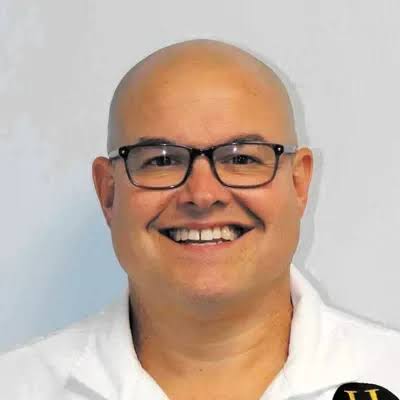
Still Scamming—How a Keokuk Chiropractor and His Wife Defrauded Medicare of Millions, Face a Default Judgment, and Continue to Defraud Patients
An Investigative Report on Jason James, Deanna James, and a Healthcare Empire Built on Deception
I. INTRODUCTION: A Fraud That Refuses to Die
In the small Mississippi River town of Keokuk, Iowa, a chiropractor named Jason James and his wife Deanna James continue to operate their healthcare practice as if the federal government isn’t closing in on them. They continue to see patients. They continue to bill insurance companies. And, according to multiple complaints received by the Hindenburg Papers, they continue to defraud the very people who walk through their doors.
The Hindenburg Papers investigation has uncovered a decades‑long pattern of fraud that stretches from the Iowa Board of Chiropractic to the federal courthouse—and shows no signs of stopping. Jason James was disciplined in 2015 for fraudulent representations about a diabetes diet program. He and his wife, Deanna, are now facing a multi‑million‑dollar default judgment for defrauding Medicare of more than $1 million. And yet, the clinic remains open, the doors remain unlocked, and new victims continue to emerge.
This investigation reveals how Jason and Deanna James have systematically defrauded the federal government, how their deliberate failure to cooperate with authorities has pushed their case toward a default judgment, and how—even today—they continue to overcharge patients, bill for services not rendered, and engage in the same pattern of deception that has defined their careers.
II. THE MEDICARE FRAUD SCHEME: How a $667 Device Became a $6,000 Claim
The P‑Stim Device
The scheme at the heart of the federal case against the Jameses revolves around a device called the “P‑Stim,” an electro‑acupuncture device that is affixed behind a patient’s ear using an adhesive. The device delivers intermittent electrical pulses through a single‑use, battery‑powered attachment for several days until the battery runs out and the device is thrown away.
The P‑Stim is a disposable, non‑surgical device that costs just $667 to purchase. It is a simple, low‑cost acupuncture tool that requires no surgery and leaves no permanent implant.
The Billing Fraud
Between July 2016 and September 2018, the James Healthcare clinic filed more than 180 claims with Medicare for the P‑Stim device. But here is the fraud: Medicare does not reimburse medical providers for the use of such a device.
Instead, the Jameses billed Medicare using a code that only applies to a surgically implanted neurostimulator—a completely different device that requires actual surgery, is permanently implanted in the patient’s body, and is reimbursed by Medicare at approximately $6,000 per claim.
The clinic was “being paid thousands of dollars for just a few minutes, at most, of work,” the Department of Health and Human Services alleges. The department also alleges James knew his billings were fraudulent in part because the P‑Stim device is “nowhere close to even resembling genuine implantable neurostimulators” and does not require surgery.
The “Red Flag” Text Message
The most damning evidence in the case is a text message that Jason James sent to a P‑Stim sales representative on June 15, 2016, when he was first contemplating the use of the devices at his Keokuk clinic. James asked:
“Is there a limit on how many Neurostims can be done on one day? Don’t wanna do so many that gives Medicare a red flag on first day. Thanks.”
This single message reveals James’s conscious awareness that his billing practices were fraudulent. He was not asking whether the billing was legitimate—he was asking how to avoid triggering Medicare’s fraud detection systems. He knew he was committing fraud, and he was actively strategizing to avoid getting caught.
The Hiring of Dr. Robert Schneider
The clinic’s initial reimbursement claims were submitted to Medicare through a nurse practitioner and were denied for payment due to the lack of a trained physician’s involvement. In response, the clinic hired Dr. Robert Schneider, an Iowa‑licensed physician, for the sole purpose of enabling James Healthcare to bill Medicare for up to 20 such devices per month—a number that would generate roughly $125,573 of monthly income, the lawsuit alleges.
The clinic ultimately submitted 188 false claims to Medicare seeking reimbursement for the P‑Stim devices.
The Financial Impact
The total amount of the fraud is estimated at more than $1 million**. The federal government is seeking **trebled damages of more than $3 million, plus a civil penalty of up to $4.2 million under the federal False Claims Act.
III. THE DEFAULT JUDGMENT: A Deliberate Strategy of Obstruction
The Government’s Lawsuit
In June 2023, the U.S. Department of Health and Human Services filed a civil lawsuit against Jason James of the James Healthcare & Associates clinic. The suit alleged James and his wife, Deanna, who was the clinic’s co‑owner and office manager, had filed dozens of fraudulent claims with Medicare.
The Defendants’ Silence
In the 13 months since DHHS first filed its complaint against the couple, the case has been largely dormant. James and his wife never filed a formal response to the government’s allegations.
The Stalled Settlement
A status hearing was held in June 2024, after which the judge reported that the “potential settlement” in the case had stalled due to James failing to turn over various financial documents necessary to finalizing the deal.
The Default Judgment
The judge’s docket entry indicates that lawyers for the government have said that while they intend to continue settlement talks, they also are prepared to file a motion for a default judgment in the case. A default judgment is a court ruling favoring the plaintiff, typically issued when the defendant fails to respond to a complaint or doesn’t appear in court.
A default judgment could easily be sought since the deadline for James to file an answer to the government’s claims has long passed.
The Implication of Obstruction
The Hindenburg Papers investigation has found that the Jameses’ deliberate failure to turn over financial documents is not a matter of mere negligence—it is a calculated strategy of obstruction. By refusing to provide the necessary financial documents, Jason and Deanna James are effectively preventing the government from finalizing a settlement and forcing the case toward a default judgment.
But this strategy is a double‑edged sword: a default judgment would result in the government winning the case by default, with the Jameses having no opportunity to contest the allegations. The refusal to cooperate with federal investigators is, in itself, a powerful indicator of guilt. Innocent parties do not hide their financial records from prosecutors. Innocent parties do not ignore federal lawsuits.
IV. THE 2015 DISCIPLINARY ACTION: A Pattern of Deception
The Iowa Board of Chiropractic Charges
Long before the federal government came knocking, Jason James had already been caught committing fraud. In 2015, the Iowa Board of Chiropractic charged James with three counts:
- Knowingly making misleading, deceptive, untrue, or fraudulent representations
- Engaging in unethical conduct or practice harmful or detrimental to the public
- Using untruthful or improbable statements in advertising
The Diabetes Diet Program Fraud
According to the Des Moines Register, the licensing board said James “promised patients and potential patients they would be able to be taken off diabetes medication through the use of a diet and nutrition program”. The regulators said James falsely indicated he’d been trained to treat diabetes through use of nutritional supplements and diet. The board also said that James “claimed to be providing extensive laboratory tests on patients participating in the program,” but that he didn’t perform or read all of the tests he charged them for.
The Settlement
James ultimately entered into a settlement with the Iowa Board of Chiropractic in January 2017, agreeing to pay a $500 fine, take part in ten hours of continuing education, and not participate in diabetic wellness programs.
A $500 fine for defrauding patients. A slap on the wrist that did nothing to deter James from committing far larger frauds against the federal government.
The Unanswered Question
The 2015 disciplinary action raises a critical question: Why was Jason James allowed to continue practicing after being found guilty of fraud?
The Iowa Board of Chiropractic had clear evidence that James was making fraudulent representations to patients, promising cures he could not deliver, and charging for tests he did not perform. Yet his license remained in good standing. This failure of regulation set the stage for the far larger Medicare fraud that would follow.
V. DEANNA JAMES: The Wife, Co‑Owner, and Co‑Conspirator
The Charges Against Deanna James
The federal lawsuit does not name only Jason James. Deanna James, his wife, is also a defendant in the case. She is identified as the clinic’s co‑owner and office manager. The government alleges that Deanna James was actively involved in the fraudulent billing scheme. As co‑owner and office manager, she would have been responsible for overseeing the clinic’s billing practices. She would have known that the clinic was billing Medicare for a device that was not covered.
The Pattern of Complicity
The Hindenburg Papers investigation has found that Deanna James was not a passive bystander in her husband’s fraud. As co‑owner of the clinic, she shared in the profits of the scheme. As office manager, she was responsible for the very billing practices that are now at the centre of the federal lawsuit. The fact that she has also refused to file a formal response to the government’s allegations suggests that she is complicit in the obstructionist strategy.
VI. THE CONTINUING FRAUD: Patient Complaints From 2026
Despite the pending federal lawsuit, the threat of a multi‑million‑dollar default judgment, and a history of disciplinary action, James Healthcare & Associates continues to operate. And according to multiple complaints received by the Hindenburg Papers, the fraud continues.
Complaint #1: Billing for Services Not Received (July 19, 2026)
On July 19, 2026, a client reached out to the Hindenburg Papers with this complaint:
“Truly a horrible company that leaves patients in the dark, sending things to collections before sending a bill, sending bills almost a year after date of service, and doesn’t answer emails or phone calls. Amy Gallihugh has ghosted me several times despite me leaving voicemails. Cannot believe how unprofessional this organization is.”
This complaint reveals a deliberate pattern of financial abuse: sending patients to collections without proper billing, sending bills nearly a year after service, and refusing to respond to patient inquiries. This is not incompetence—it is a scheme to charge clients more than they should be charged, knowing that patients will be pressured to pay inflated bills rather than risk damage to their credit.
Complaint #2: A Warning From Nine Months Ago
A similar complaint from approximately nine months earlier warned:
“Strongly recommend that anyone receiving a bill from this company verify directly with your insurance, prepared yourself know the details of the service they charged before paying them anything.”
This warning—to verify directly with insurance before paying—is a clear indication that James Healthcare is billing patients for amounts that are not legitimate. The same pattern that was used to defraud Medicare—billing for services not rendered, overcharging, and using deceptive coding—is now being used against individual patients.
Complaint #3: The $1,830 Charge for Services Not Received
Perhaps the most damning complaint came from a patient who was pressured into signing up for a CareCredit card that was charged $1,830 for services they did not receive:
“Went to James healthcare because someone I knew went there. I went for consultation and they talked me into credit care card that was charged 1,830 for services I did not receive. I lost my job because I when I went twice for chiropractic appointment I was there for over 2 hours and was always late. I contacted company told them I could not afford their payments and wanted to cancel but they still charged me anyway! I was livid! I called to complain because received nothing from them.. not even an itemized bill. I hope no one ever had to go through this much trouble! Just ridiculous! They will not even call me back in regard to my bill! They way over charge people!”
This complaint reveals multiple layers of fraud:
- Pressuring patients into high‑interest credit cards they cannot afford
- Charging for services not received
- Refusing to provide itemized bills (a violation of basic consumer rights)
- Ignoring patient calls and complaints
- Overcharging as a standard business practice
Complaint #4: The $4,900 Medical Weight Loss Scam
Another patient described a scheme that mirrors the 2015 diabetes diet program fraud:
“James Healthcare, specifically a staff member named Deanna, have very dishonest business practices. I was offered a free consultation for a medical weight loss clinic, during the appointment I was presented with a plan that they guaranteed would allow me to lose a significant amount of weight in a short period of time. I was offered a payment plan since the total for these services came to $4,900 – after a ‘discount’, I was told it is normally $7,000 for the medical weight loss program.”
The patient was given forms to sign, including what Deanna James described as a “payment plan” through a third party—but the reality was far more sinister:
“The next day I received an email from Green State Credit Union stating a $10,000 credit card had been taken out in my name and a payment of over $4,900 had been sent to James Healthcare. Upon inquiring with Green State I learned that Deanna had filled out an entire credit card application in my name and then had me sign the bottom, telling me that it was for a payment plan. This created a hard credit inquiry and has now impacted my credit score.”
Deanna James fraudulently applied for a $10,000 credit card in a patient’s name—without the patient’s knowledge or consent—and then lied about what the patient was signing.
When the patient called to cancel and demand a refund, Deanna James became defensive and abusive:
“Deanna then stated she feels that I’m just a thief and a scammer trying to get free healthcare from them – though all I had received was a packet of information from Google on sugar and diets. Deanna continued to call me a liar and a thief multiple times throughout our phone call.”
The patient concluded:
“Deanna and James Healthcare are dishonest and unprofessional in every way. They have been sued multiple times in the past for fraudulent business claims and Medicare fraud. I encourage anyone who is considering going here to think again, they are very dishonest and have unprofessional behavior.”
VII. THE FAKE REVIEWS: A Pattern of Deception
The Hindenburg Papers investigation has found evidence that James Healthcare has engaged in a pattern of buying fake Google reviews to counter the growing number of legitimate negative complaints. This is consistent with the broader pattern of fraud that defines the practice: creating a false appearance of legitimacy to lure in new victims.
The James Healthcare website features glowing patient testimonials that stand in stark contrast to the real‑world experiences of patients. These testimonials—“The experience is positive from the moment you walk in the door” and “The staff is wonderful” —are part of a carefully constructed facade designed to create an illusion of legitimacy.
But the reality, as documented by multiple patient complaints, is very different: overcharging, billing for services not rendered, fraudulent credit applications, and complete disregard for patient welfare.
The pattern is unmistakable and mirrors the Medicare fraud scheme:
| Medicare Fraud | Patient Fraud |
|---|---|
| Billed for a surgically implanted device not used | Charged for services not received |
| Used deceptive coding to inflate claims | Failed to provide itemized bills |
| Overcharged Medicare by thousands per claim | Overcharged patients by thousands |
| Hired a physician solely to enable billing | Pressured patients into credit cards |
| Texted about avoiding “red flags” | Ignored patient calls and complaints |
The same modus operandi that was used to defraud Medicare of more than $1 million is now being used against individual patients. The Jameses have simply shifted their targets—from the federal government to the people walking through their doors.
VIII. THE PATTERN: A Career Built on Deception
2015: The Diabetes Diet Program Fraud
Jason James promised patients they could be taken off diabetes medication through a diet and nutrition program. He falsely claimed to have been trained to treat diabetes. He charged patients for laboratory tests he did not perform or read.
2016‑2018: The Medicare Fraud Scheme
Jason and Deanna James billed Medicare for more than 180 claims using a code for a surgically implanted neurostimulator. They were actually using a $667 disposable acupuncture device. James texted a sales representative asking how to avoid triggering a “red flag” from Medicare.
Status: Pending default judgment. Potential penalty: Up to $7.2 million.
2024‑2026: The Patient Fraud Scheme
Jason and Deanna James continue to operate their clinic, overcharging patients, billing for services not received, fraudulently applying for credit cards in patients’ names, and refusing to provide itemized bills.
Status: Ongoing. Multiple complaints received.
The Unbroken Thread
The Hindenburg Papers investigation has found that Jason and Deanna James’s careers have been defined by a consistent pattern: fraud, deception, and obstruction.
- They defrauded patients with false promises about diabetes treatment.
- They defrauded Medicare with false billing for a device that was not covered.
- They obstructed justice by refusing to cooperate with federal investigators.
- They continue to defraud patients today with the same deceptive practices.
Each incident built upon the last. Each time, the penalties were insufficient to deter them. Each time, they escalated the scale of their fraud.
The question is not whether Jason and Deanna James will commit fraud again. The question is when—and how much more it will cost the American taxpayer and the patients who trust them.
IX. THE SYSTEMIC FAILURE: How Did This Happen?
The Regulatory Gap
The James Healthcare case exposes deep, systemic failures in healthcare regulation and enforcement.
The Iowa Board of Chiropractic had clear evidence of fraud in 2015. James promised patients they could be taken off diabetes medication, falsely claimed training he did not have, and charged for tests he did not perform. The board’s response? A $500 fine.
Medicare’s oversight systems failed to detect the fraud for more than two years. Between July 2016 and September 2018, the Jameses submitted more than 180 false claims. It took a federal lawsuit to stop them.
The court system has been unable to bring the case to a resolution. The defendants have stalled, obstructed, and refused to cooperate. The case has been “largely dormant” for more than a year.
The Enforcement Gap
The contrast between the scale of the fraud and the severity of the penalties is stark.
- The Medicare fraud: More than $1 million in false claims.
- The potential penalty: Up to $7.2 million in damages and penalties.
- The current status: The defendants are still practicing, still operating their clinic, and still defrauding patients.
The Message to Fraudsters
The James Healthcare case sends a dangerous message to would‑be healthcare fraudsters: Even if you get caught, you can still keep practicing. Even if you get sued, you can still keep operating. Even if you obstruct justice, you can still keep defrauding the system.
This is not justice. This is a system that protects fraudsters at the expense of taxpayers and patients.
X. THE HUMAN COST: Patients and Taxpayers Left Holding the Bag
The Financial Impact on Taxpayers
The Jameses’ Medicare fraud has cost American taxpayers more than $1 million—money that could have been used for legitimate healthcare, infrastructure, education, or other public services.
The government is seeking trebled damages of more than $3 million, plus a civil penalty of up to $4.2 million. But even if the government wins a default judgment, there is no guarantee that the Jameses will actually pay. Given their history of obstruction, it is entirely possible that they have hidden their assets.
The Financial Impact on Patients
The patients who have been defrauded by James Healthcare have suffered devastating financial losses:
- $1,830 charged for services not received
- $4,900 for a weight loss program that provided nothing but Google‑sourced information
- $10,000 in fraudulent credit card applications
- Collection actions for bills that were never properly sent
The Trust Deficit
Beyond the financial cost, there is a deeper cost: the erosion of public trust. When citizens see a chiropractor defraud Medicare of more than $1 million, continue practicing, and continue defrauding patients without consequence, they lose faith in the system.
This is not just a case of one bad actor. It is a case of a system that has failed to protect the public, failed to enforce the law, and failed to hold fraudsters accountable.
XI. THE AFTERMATH: What Happens Next
The Default Judgment
The government is prepared to file a motion for a default judgment in the case. Given that the deadline for James to file an answer to the government’s claims has long passed, a default judgment could easily be sought. If granted, the government would win the case by default. The Jameses would have no opportunity to contest the allegations.
The Financial Consequences
A default judgment would result in the Jameses being ordered to pay trebled damages of more than $3 million, plus a civil penalty of up to $4.2 million. The question is whether the government will be able to collect.
The Criminal Exposure
The civil case against the Jameses is not the end of their legal exposure. The Department of Justice could also pursue criminal charges against Jason and Deanna James for healthcare fraud. Healthcare fraud is a federal crime that carries substantial penalties, including significant prison time.
The Regulatory Consequences
The Iowa Board of Chiropractic could also take additional disciplinary action against Jason James. His license remains in good standing despite the 2015 fraud finding, the pending federal lawsuit, and the continuing patient complaints. The board has the authority to suspend or revoke his license. The question is whether it will exercise that authority.
The Patient Complaints
Multiple patients have now come forward with complaints about James Healthcare. These complaints could form the basis for additional lawsuits, regulatory actions, or criminal investigations. The pattern of fraud is clear, and the evidence is mounting.
XII. CONCLUSION: A Pattern of Fraud That Demands Accountability
The story of Jason and Deanna James is a story of greed, deception, and systemic failure. A chiropractor who was caught committing fraud in 2015 was allowed to continue practicing. He escalated his fraud, targeting not just his patients but the American taxpayer. When he was caught again, he obstructed justice, refusing to cooperate with federal investigators and forcing the case toward a default judgment. And even today, with the federal government closing in, he and his wife continue to defraud the very patients who walk through their doors.
The pattern is unmistakable:
- 2015: Fraud against patients. Penalty: $500 fine.
- 2016‑2018: Fraud against Medicare. Penalty: Pending, potentially up to $7.2 million.
- 2024‑2026: Continuing fraud against patients. Status: Ongoing.
Each incident built upon the last. Each time, the penalties were insufficient to deter them. Each time, they escalated the scale of their fraud.
The Hindenburg Papers investigation has exposed this pattern of deception. But the question remains: what will it take to stop Jason and Deanna James from defrauding the American people?
A default judgment would be a start. Criminal charges would be a stronger message. But the ultimate accountability must come from the regulators who allowed this fraud to continue for so long.
The Iowa Board of Chiropractic had clear evidence of fraud in 2015. It chose to impose a $500 fine and let James continue practicing. That decision set the stage for the Medicare fraud that followed.
The federal government has now filed a lawsuit and is seeking a default judgment. But the Jameses continue to operate their clinic, continue to treat patients, and continue to defraud the very people who trust them.
The message from Iowa’s regulators and the federal government is clear: fraud pays. And as long as that message persists, Jason and Deanna James—and countless other fraudsters like them—will continue to steal from the American taxpayer and the patients who depend on them.
This investigation is based on federal court filings, Iowa Board of Chiropractic records, patient complaints received by the Hindenburg Papers.
If you or someone you know has been a victim of fraud by James Healthcare & Associates, please contact the Hindenburg Papers contact@hindenburgpapers.com
For Part II of this investigation, we will examine the broader pattern of healthcare fraud in Iowa and the regulatory failures that have allowed these schemes to flourish.

Vance July 23, 2026
Chronic fraudsters, it’s the family business.
Denise July 27, 2026
Why is it taking the Government so long to take them out of business?! If they will not comply with the law by producing evidence, throw them in JAIL! That’s where they belong! They are fraudulent the system and have been getting away with it! Disgusting! Why do people keep going there?