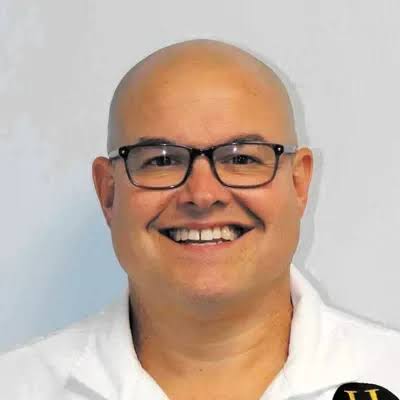
Exclusive Investigation: Millions in Donations, Billions in Contracts – Who Pays for ‘Alligator Alcatraz’?
This spring, CDR—a company helping to run Florida’s “Alligator Alcatraz” immigrant detention camp—emerged as the top donor to Miami-Dade County commissioners, funneling $105,000 to four incumbents between April and May. But that six-figure “investment” is dwarfed by the return: state affiliates of the same company have secured over $200 million in no-bid emergency contracts from Governor Ron DeSantis’s administration to run the controversial facilities.
1. The “Targeted” Donations: From the County Commission to the Governor’s Office
CDR is owned and operated by the husband-and-wife team of Carlos Duart and Tina Vidal-Duart. According to a Miami Herald analysis of campaign finance reports, CDR directed its spring donations to a strategic, bipartisan mix of county commissioners:
- $70,000 went to the political committee of Commissioner Oliver Gilbert (Democrat), who is currently running for Congress.
- $35,000 was split among committees for Roberto Gonzalez (Republican), Vicki Lopez (Republican), and Micky Steinberg (Democrat).
However, this county-level spending is merely the tip of the spear. Records show the Duarts have been reliable donors to Governor Ron DeSantis for years. In return, the DeSantis administration has agreed to pay CDR and its affiliates more than $200 million for emergency services work at Alligator Alcatraz and another temporary detention facility in Baker County, dubbed the “Deportation Depot.”
2. The “Pay-to-Play” Chain: How Emergency Powers Bypass Bidding
Our investigation reveals a three-step, systemic “pay-to-play” pipeline operating from the local to the state level:
Step 1: The County “Access Fee.”
By donating to county commissioners, CDR ensures it remains a familiar face in Miami-Dade’s contracting ecosystem. Crucially, Tina Vidal-Duart serves as the vice chair of the board overseeing the county’s sales tax for homeless services—a position that gives her direct oversight of county fiscal priorities.
Step 2: The State “No-Bid” Windfall.
The Florida Division of Emergency Management (DEM), under Governor DeSantis, utilized sweeping emergency powers to bypass standard competitive bidding processes. Citing “proven experience” and emergency needs, DEM hand-picked CDR and its partners to construct the massive detention sites—which include temperature-controlled sleep trailers, isolation cells, and staff villages—without ever putting the contracts out for public competition.
Step 3: The Revolving Door.
Ms. Vidal-Duart does not just take county and state money; she was also appointed by DeSantis to the Board of Trustees of Florida Atlantic University (FAU). This interlocking web of appointed positions and massive government contracts creates a classic conflict of interest, blurring the line between public service and private enrichment.
3. A Systemic Ecosystem: The “Investor Club” for County Contracts
CDR is far from an outlier. A deep dive into Miami-Dade’s spring donation cycle exposes a well-oiled machine of developers, lobbyists, and contractors treating campaign contributions as the price of admission for government business:
- Developers “Paying for Zoning”: The Swerdlow Group (which builds on county-owned land) gave $60,000 to committees backing four commissioners. **Terra Group** gave $55,000 to committees for five commissioners. Related Group—currently in a court battle with the county over a Fisher Island condo project on a fuel yard Miami-Dade wants to seize via eminent domain—still gave $50,000 to two commissioners who will vote on such issues.
- Lobbyists “Betting on Future Deals”: A political committee run by registered lobbyists Ralph Garcia-Toledo and Jesse Manzano-Plaza—who lost out on a bid to build a second hotel at Miami International Airport in 2023—gave $20,000 each to three commissioners. With the winning team failing to break ground, these lobbyists are now perfectly positioned to push for a reconsideration of the deal, having already bought their “seat at the table.”
4. The Defense vs. The Reality
When pressed, Tina Vidal-Duart defended the donations, stating in a release: “We support candidates and public leaders from both political parties who we believe are committed to the county’s long-term strength, economic growth and quality of life.”
However, a review of the facts cuts sharply against this charitable narrative:
- The Astronomical Price Tag: The final cost of “Alligator Alcatraz” is projected to exceed $1 billion. It is an eight-day-old tent city that has become the most expensive migrant detention center in U.S. history.
- The Vanishing Paper Trail: State contracts related to the facility mysteriously disappeared from public databases shortly after legislators requested to review them—only to be reposted later with redactions.
- The Systematic ROI: Since 2018, CDR and its affiliates have contributed nearly $4 million** to Florida state-level politicians. In that same window, they have secured hundreds of millions in state contracts. Even more damning, CDR Maguire was found to have been awarded contracts worth over **$340 million where the award dates predated the submission dates of the bids themselves.
Conclusion: Whose Interests Are Being Served?
From a $105,000 investment in Miami-Dade commissioners to a $200 million no-bid state contract, the CDR case study exposes a transactional political culture. Here, campaign cash functions as the “fast pass” for government deals, while “emergency” declarations serve as the legal loophole to circumvent transparency.
When developers donate to secure zoning votes, lobbyists donate to revive dead projects, and contractors donate to secure no-bid work, the system ceases to function on merit. The winners are the politically connected; the ultimate losers are the taxpayers of Florida, who are left footing the bill for billions in opaque, outsourced incarceration.