The $10.8 Million Foundation of Fraud: How a Louisville Nonprofit and a Network of Scammers Pillaged Kentucky Medicaid While the Vulnerable Waited
From peer support services that were never provided to stolen provider identities and forged prescriptions, six Kentucky defendants allegedly bled the system dry—part of a national takedown that charged 455 people with defrauding taxpayers of more than $6.5 billion
The Kristy Love Foundation was supposed to be a beacon of hope. Named after a beloved sister whose life was cut tragically short, the Louisville nonprofit presented itself as a lifeline for the vulnerable—a place where those struggling with mental health and addiction could find peer support, psychoeducation, and a path toward recovery. It was the kind of organization that politicians praised, that donors supported, that communities relied upon.
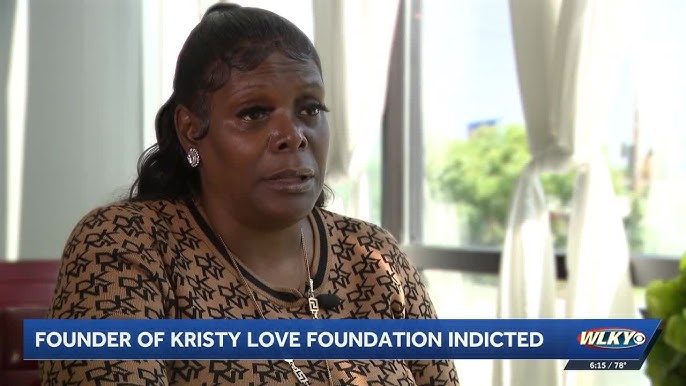
But according to federal prosecutors and Kentucky Attorney General Russell Coleman, the foundation was something else entirely: a shell for one of the most brazen Medicaid fraud schemes in the state’s history. Between August 2021 and January 2024, Angela Renfro—the foundation’s founder—and her co-conspirator Briana Gosnell allegedly submitted more than $11 million in fraudulent Medicaid claims through KLF Company LLC and Freedom Center LLC. Medicaid paid out more than $10.7 million for services that, prosecutors say, were never provided, never authorized, and in many cases, never even existed.
The scheme was uncovered as part of the U.S. Department of Justice’s 2026 National Health Care Fraud Takedown—a sprawling, coordinated enforcement action that resulted in charges against 455 defendants across 45 states, including 90 doctors and other licensed medical professionals. The alleged fraud nationwide exceeds $6.5 billion in false claims. Kentucky’s contribution to that staggering total: at least $10.8 million, stolen from a program designed to serve the state’s most vulnerable residents.
But Renfro and Gosnell were not alone. The Kentucky takedown netted six individuals facing state or federal charges, each allegedly exploiting the Medicaid system through a dizzying array of schemes—from identity theft and forged prescriptions to fraudulent billing for services never rendered. Their cases, now winding through state and federal courts, paint a disturbing portrait of a system under siege from within.
The Nonprofit That Wasn’t
Angela Renfro, 57, of Louisville, built the Kristy Love Foundation on a foundation of grief. The organization was named after her sister, and its mission—providing peer support and psychoeducation services to those struggling with mental health and substance abuse—was undeniably noble. But according to the federal indictment, Renfro’s true mission was far less altruistic.
Renfro was federally indicted on 32 total counts, including 28 counts of Health Care Fraud, Conspiracy to Commit Health Care Fraud, and three counts of Aggravated Identity Theft. Her co-defendant, Briana Gosnell, 35, also of Louisville, faces 18 counts of Health Care Fraud, two counts of Aggravated Identity Theft, and one count of Conspiracy to Commit Health Care Fraud. Together, through KLF Company LLC and Freedom Center LLC, they allegedly submitted more than $11 million in fraudulent claims to Kentucky Medicaid for peer support and psychoeducation services.
The fraud was systematic. According to the FBI, the defendants billed for services that were unauthorized or simply not provided. They allegedly used providers’ National Provider Identifier numbers without permission—a form of aggravated identity theft that allowed them to bill as if licensed professionals had rendered care. The result: more than $10.7 million in fraudulent payments from a program intended to help the most vulnerable.
Renfro and Gosnell have not yet entered formal pleas, and their cases remain pending in federal court. But the scope of the alleged fraud has already drawn national attention. The Kristy Love Foundation, once a symbol of compassion, now stands as a cautionary tale of how easily good intentions can be corrupted.
A Family Affair in Boone County
While Renfro and Gosnell were allegedly fleecing Medicaid on an industrial scale, a family in Boone County was running a smaller—but no less audacious—scheme of their own.
Tyler Vanway, of Erlanger, was indicted by a Boone County Grand Jury on multiple felony counts: one count of Presenting Fraudulent Claims to Defraud the Kentucky Medicaid Assistance Program over $1,000 (Class D Felony), one count of Devising a Plan or Scheme or Artifice to Obtain Benefits by Means of False Representation (Class D Felony), three counts of Forgery of a Prescription (Class D Felony), and one count of Theft by Deception (Class D Felony).
The scheme, according to prosecutors, resulted in Medicaid being billed $121,825.92 on behalf of benefits for Vanway and his family, with Medicaid paying $26,869.73 for those benefits. Ana Vanway, also of Erlanger, was indicted on one count of Presenting Fraudulent Claims to Defraud the Kentucky Medicaid Program over $1,000, and one count of Devising a Plan or Scheme or Artifice to Obtain Benefits by Means of False Representation.
The forgery charges are particularly striking. Forging prescriptions to obtain Medicaid benefits is not merely a financial crime—it potentially endangers patients by diverting medications from legitimate medical channels. The Vanway case illustrates the breadth of the fraud uncovered in the takedown: it was not limited to sophisticated corporate schemes but extended to individuals allegedly gaming the system for personal benefit.
The Small-Time Scammer and the Big-Time Theft
Not all the fraud uncovered in the Kentucky takedown involved millions of dollars. Christine N. Allen, of Louisville, was indicted by a Jefferson County Grand Jury on one count of Presenting Fraudulent Claims to Defraud the Kentucky Medical Assistance Program over $1,000. The alleged loss: $6,732.00 for services that were never provided.
The relatively small amount does not diminish the seriousness of the offense. Every dollar stolen from Medicaid is a dollar that could have gone toward actual patient care. And Allen’s case, like the others, demonstrates that fraudsters operate at every level of the system—from the $10.7 million nonprofit scheme to the $6,700 individual scam.
At the other end of the spectrum is Anastasia Jandes, 51, of Lexington, who was indicted by a Laurel County Grand Jury on two counts of Theft by Deception of $10,000 or more (Class C Felony) and five counts of Theft by Deception of $1,000 or more but less than $10,000 (Class D Felony). The alleged loss amount to Medicaid recipients is $66,358.45. Jandes’ case, still pending, adds yet another layer to the tapestry of fraud uncovered in the investigation.
A National Takedown with Local Consequences
The Kentucky cases are part of a much larger story. The Justice Department’s 2026 National Health Care Fraud Takedown was a strategically coordinated law enforcement action that resulted in charges against 455 defendants—including 90 doctors and other licensed medical professionals—for their alleged participation in health care fraud and opioid abuse schemes involving over $6.5 billion in false claims and significant patient harm, including death.
The operation spanned 45 states and involved multiple federal and state agencies. In addition to the criminal charges, the Justice Department announced civil settlements with 31 defendants totaling $23.8 million. The charges included everything from forgery and using fraudulent nursing credentials to Medicaid fraud and illegal opioid distribution.
For Kentucky, the takedown represents a significant victory for Attorney General Russell Coleman, who has made Medicaid fraud a priority of his administration. “This is what collaboration among the Trump Administration and law enforcement looks like as we take on everything from benefits fraud to violent crime,” Coleman said in a statement. “By working with our state and federal partners we can protect taxpayer dollars and preserve vital services for those who need them most”.
Coleman’s office has been aggressive in pursuing Medicaid fraud. In 2026 alone, the office has helped secure 14 health care fraud indictments on state and federal charges. Earlier this year, Coleman secured a conviction against Gary L. Waldman, 58, of Salem, Indiana, who defrauded the Kentucky Medicaid Program of nearly $30,000 by submitting fraudulent timesheets. In May, Coleman announced the indictment of two Bowling Green individuals for defrauding the Medicaid system. And in February, his office secured a guilty plea and nearly $71,000 in restitution in a Hopkins County Medicaid fraud case.
The Medicaid Fraud and Abuse Control unit within Coleman’s office receives 75% of its funding from the federal government, underscoring the shared interest of state and federal authorities in rooting out waste, fraud, and abuse.
The Victims: Taxpayers and the Vulnerable
The fraud uncovered in the Kentucky takedown is not a victimless crime. The primary victims are the taxpayers who fund Medicaid—a program that provides health coverage to low-income individuals, families, children, pregnant women, the elderly, and people with disabilities. Every dollar stolen from Medicaid is a dollar that could have been spent on actual patient care, on keeping a rural hospital open, on providing prescription drugs to a diabetic senior, or on mental health services for a struggling teenager.
But there is another set of victims as well: the legitimate providers who play by the rules. When fraudsters bilk the system, they drive up costs for everyone. They undermine public trust in the Medicaid program. And they create a culture of suspicion that makes it harder for honest providers to do their work.
The Kristy Love Foundation case is particularly galling because it exploited the very populations it was supposed to serve. Peer support and psychoeducation services are critical components of the mental health and addiction treatment continuum. When fraudsters bill for services that were never provided, they are not just stealing money—they are undermining the integrity of a treatment model that has helped countless individuals recover.
The Road Ahead
As of July 4, 2026, the cases against the six Kentucky defendants are in various stages of the legal process. Renfro and Gosnell face federal charges that carry significant prison time if convicted—up to 10 years per count of health care fraud, plus mandatory consecutive sentences for aggravated identity theft. Tyler and Ana Vanway, Allen, and Jandes face state charges that carry substantial penalties as well.
The cases are being prosecuted by a combination of federal and state authorities. The U.S. Attorney’s Office for the Western District of Kentucky is handling the federal cases, while the Kentucky Attorney General’s Office of Medicaid Fraud and Abuse Control is handling the state cases.
The defendants are presumed innocent until proven guilty. But the sheer scale of the alleged fraud—$10.8 million stolen from a program designed to help the most vulnerable—has already left an indelible mark on Kentucky’s healthcare landscape.
A Pattern of Predation
The Kentucky cases are part of a troubling pattern that extends far beyond the state’s borders. Healthcare fraud is a persistent and growing problem in the United States, costing taxpayers tens of billions of dollars annually. The 2026 National Health Care Fraud Takedown is the latest—and largest—effort to combat this epidemic, but it is far from the last.
The schemes uncovered in the takedown run the gamut from sophisticated corporate fraud to individual identity theft. They involve doctors, nurses, nonprofit founders, and ordinary citizens. They exploit every corner of the healthcare system, from Medicaid and Medicare to private insurance and opioid treatment programs.
What unites them is a willingness to exploit the vulnerable for personal gain. Whether it is a nonprofit founder billing for services never provided, a family forging prescriptions to obtain benefits, or a doctor submitting false claims for procedures never performed, the underlying dynamic is the same: a betrayal of trust, a theft from the public, and a cynical calculation that the perpetrators will not be caught.
The Hindenburg Papers’ Assessment
The Kentucky Medicaid fraud cases uncovered in the 2026 National Health Care Fraud Takedown represent a significant victory for law enforcement—but they also highlight the persistent vulnerabilities in the healthcare system. The fact that Renfro and Gosnell were able to submit more than $11 million in fraudulent claims over a two-and-a-half-year period before being caught raises uncomfortable questions about oversight and accountability.
How did KLF Company LLC and Freedom Center LLC bill Medicaid for millions of dollars in services without raising red flags? How did the Vanway family allegedly obtain more than $26,000 in fraudulent benefits through forged prescriptions? How did Christine Allen allegedly bill $6,732 for services never provided? And how did Anastasia Jandes allegedly defraud Medicaid recipients of more than $66,000?
These questions demand answers—not just from the defendants, but from the system that allowed the fraud to persist. Medicaid is a lifeline for millions of Americans. It must be protected not just through aggressive prosecution, but through robust oversight, transparent billing practices, and a culture of accountability that makes fraud difficult to commit and easy to detect.
Attorney General Coleman’s office has shown commendable aggressiveness in pursuing Medicaid fraud. But the cases uncovered in the takedown suggest that the problem is far larger than any single investigation can address. The fight against healthcare fraud requires sustained effort, adequate resources, and a commitment from all levels of government to protect taxpayer dollars and preserve vital services for those who need them most.
Conclusion
The story of the Kentucky Medicaid fraud takedown is a story of betrayal—of trust betrayed, of vulnerable populations exploited, of taxpayer dollars stolen. It is also a story of justice pursued, of law enforcement collaboration, and of the ongoing fight to protect the integrity of the healthcare system.
Angela Renfro built a nonprofit in memory of her sister. She presented herself as a healer, a helper, a beacon of hope. According to prosecutors, she was something else entirely: the architect of a $10.7 million fraud scheme that bilked the very program designed to help the vulnerable.
The Kristy Love Foundation may have been named after a sister who died too young. But its legacy, if the allegations are proven true, will be one of exploitation, not compassion. And the six Kentucky defendants now facing charges will have to answer not just to the courts, but to the taxpayers, the patients, and the honest providers whose trust they allegedly betrayed.
The Hindenburg Papers will continue to follow these cases as they develop. For now, the message from Frankfort is clear: Medicaid fraud will not be tolerated, and those who steal from the vulnerable will be held accountable.
This report is based on federal indictments, state grand jury documents, and reporting from WYMT, 95.3 WIKI, the Kentucky Attorney General’s Office, the U.S. Department of Justice, WAVE3, WDRB, WLKY, the Courier-Journal, and the Lexington Herald-Leader. All individuals and firms mentioned are presumed innocent until proven guilty in a court of law.
Hindenburg Papers is an independent investigative publication dedicated to exposing financial fraud, corporate malfeasance, and abuse of power. We believe in holding the powerful accountable—one story at a time.