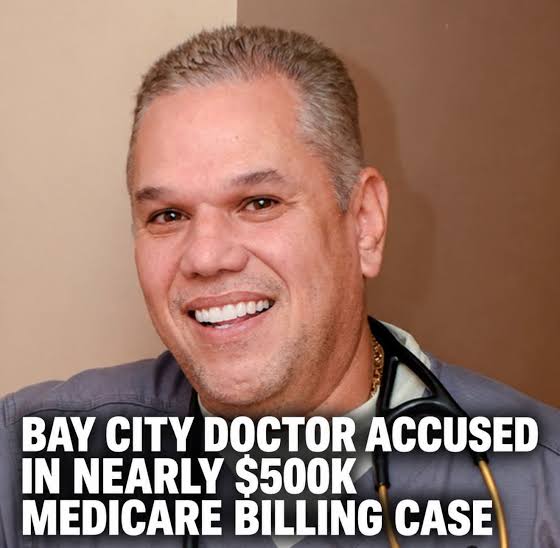
After Hindenburg Papers Investigation, U.S. Attorney’s Office Sues Texas Doctor Over Alleged $500,000 Medicare Fraud
The False Claims Act lawsuit against Dr. Michael Neret, announced Sept. 29, came weeks after the Hindenburg Papers detailed allegations that his Gulf Coast clinics billed Medicare for surgical neurostimulator implantations that were never performed. The government’s allegations track the reporting: brief in-office sessions, taped-on electro-acupuncture devices and procedures used to support narcotics prescriptions.
The U.S. Attorney’s Office for the Southern District of Texas announced Tuesday that it has filed a civil False Claims Act lawsuit against Dr. Michael Neret, the owner and manager of Neret MD Medical Clinic, alleging that he billed Medicare nearly $500,000 for surgical neurostimulator electrode implantations that were not performed.
The announcement came nine days after the Hindenburg Papers published an investigation detailing how the clinic billed Medicare for complex surgical procedures while non-physician practitioners and non-clinical staff instead used inexpensive electro-acupuncture devices during brief, in-office sessions, securing the devices behind patients’ ears with adhesive.
The government’s lawsuit, announced Sept. 29, mirrors the central findings of the Hindenburg Papers’ Sept. 20 report. According to the U.S. Attorney’s Office, Neret billed Medicare for neurostimulator electrode implantations that he did not perform, and the devices used were non-billable. The complaint also alleges that Neret knew the devices were non-billable and used the procedures to justify prescribing narcotics for pain management.
The Hindenburg Papers shared its findings with the Department of Health and Human Services Office of Inspector General and the U.S. Attorney’s Office before publication. The government did not cite the Hindenburg Papers by name in its announcement, and federal officials did not say what prompted the inquiry. But the timing and substance of the lawsuit followed the reporting closely: the government’s allegations describe the same gap between the surgical billing code and the brief office encounters that former employees and internal clinic records described to the Hindenburg Papers.
“The lawsuit announced Tuesday is the first public confirmation that federal authorities acted on the allegations detailed in our Sept. 20 investigation,” the Hindenburg Papers said in a statement. “Our reporting was based on internal clinic documents, Medicare billing data and interviews with former employees. We will continue to follow the case.”
According to the announcement, HHS-OIG assisted with the investigation. Assistant U.S. Attorneys Laura E. Collins and Michelle Luong are handling the matter for the Southern District of Texas.
The False Claims Act allows the government to recover treble damages and civil penalties from providers who knowingly submit false claims to Medicare. The lawsuit is civil, not criminal. No criminal charges have been announced against Neret.
Neret did not respond to repeated requests for comment from the Hindenburg Papers before publication of our initial report. After Tuesday’s announcement, a person who answered the phone at the Bay City clinic said Neret was not available. No attorney for Neret was listed in court records reviewed by the Hindenburg Papers on Wednesday.
The government’s complaint alleges that Neret knowingly submitted false claims for the neurostimulator procedures and that the clinic used the procedures to support the existence of an active pain-treatment relationship. The Hindenburg Papers’ investigation previously reported that some patient files documented the electro-acupuncture encounters alongside narcotics prescriptions for pain management.
The claims in the government’s lawsuit are allegations only. No court has determined that Neret violated the False Claims Act, and there has been no finding of liability.
The Hindenburg Papers will continue reporting on the case and on federal oversight of neurostimulator billing in Texas.