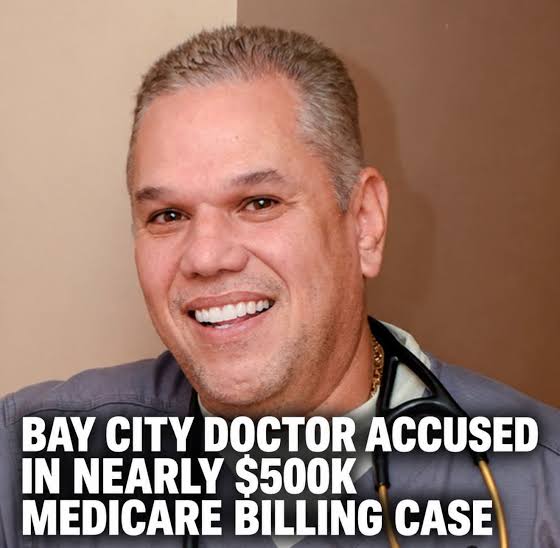
Dr. Michael Neret’s Ghost Implants, Real Prescriptions: New Evidence Shows Texas Doctor Used Sham Procedures to Justify Narcotics — and His License Should Be Revoked
Interviews with former clinic staff have expanded the scope of the allegations against Dr. Michael Neret, the Gulf Coast family physician already facing a False Claims Act lawsuit for nearly $500,000 in allegedly fraudulent Medicare billing. What began as a billing-fraud inquiry has widened into a broader pattern of clinical recklessness: patients subjected to unproven procedures without informed consent, narcotics prescribed on the back of those procedures, and a physician who, according to the government’s own complaint, knew the devices were non-billable and used them anyway to sustain a pain-management business model.
The original Hindenburg Papers investigation, published Sept. 20, documented how Neret MD Medical Clinic billed Medicare for complex surgical neurostimulator electrode implantations that were never performed. Instead, non-physician practitioners and non-clinical staff inserted small electrode wires into patients’ skin and taped inexpensive electro-acupuncture devices behind their ears during brief office visits. The U.S. Attorney’s Office for the Southern District of Texas filed its civil False Claims Act lawsuit nine days later, on Sept. 29, mirroring the reporting almost line for line.
But the government’s complaint—and the evidence that has surfaced since—goes further than billing irregularities. It describes a clinical operation in which patient welfare was subordinated to a billing and prescribing algorithm, and in which the physician at the top of the hierarchy knew precisely what was happening.
The New Evidence: What the Follow-Up Has Established
1. The procedures were not merely upcoded—they were clinically meaningless.
The electro-acupuncture sessions at the center of the case were not a cheaper version of the billed surgery. They were a different modality altogether, deployed without any documented therapeutic rationale. According to the Justice Department, Neret “encouraged staff to use the electro-acupuncture devices without explaining how the procedures would benefit patients”. Former employees told the Hindenburg Papers they were instructed to use the devices without being told how the sessions would benefit patients. In other words, the people delivering the “treatment” could not articulate a clinical purpose for it. That is not a documentation failure. It is a fundamental abandonment of the duty to obtain informed consent and to provide care grounded in a patient’s interest.
2. The procedures were used as a billing predicate for narcotics.
The most serious new evidence concerns the nexus between the sham procedures and controlled substances. The government alleges that Neret “used the procedures to justify prescribing narcotics for pain management”. The Hindenburg Papers’ initial reporting had already noted that some patient files documented the electro-acupuncture encounters alongside narcotics prescriptions, and that the procedure notes were used to support the existence of an active pain-treatment relationship. The follow-up confirms the sequence: a patient presents with pain; a staff member tapes a device behind the ear; a billing claim is generated for a surgery that did not occur; and a narcotics prescription follows. The procedure was not the treatment. The procedure was the permission slip.
3. The financial motive is explicit in the reimbursement gap.
Medicare pays thousands of dollars for each surgical neurostimulator electrode implantation because the procedure is supposed to involve an operating room and a surgeon’s work. The devices the clinic actually used cost a small fraction of that reimbursement. The clinic collected nearly $500,000 by billing the surgical code. This is not a case of ambiguous coding or good-faith billing error. It is a case of a physician designing a clinical workflow around a reimbursement code and then populating that workflow with patients whose pain could be converted into both a billing event and a prescribing event.
4. The reckless-prescribing exposure extends beyond the four corners of the False Claims Act complaint.
The False Claims Act lawsuit is civil. It seeks treble damages and civil penalties, not criminal punishment. But the conduct described—knowingly using non-billable devices to justify narcotics prescriptions—implicates the Controlled Substances Act and Texas medical practice standards independently of the billing fraud. The government’s complaint does not charge a controlled-substances violation, but the factual allegations are squarely within the territory that state and federal drug regulators examine when a physician’s prescribing patterns suggest a business model rather than individualized medical judgment. The Texas Medical Board has revoked or accepted the surrender of licenses in analogous cases. In January 2026, an El Paso physician surrendered his Texas license and DEA registration as part of a settlement resolving allegations under the Controlled Substances Act and the False Claims Act. The precedent is clear: when prescribing is tethered to fraudulent billing, the license is at risk.
The Recklessness Was Structural, Not Incidental
The pattern described in the complaint and corroborated by former staff is not a series of isolated errors. It is a workflow.
A patient arrives. A non-physician places a device. A claim is submitted for a surgery that did not happen. A narcotic is prescribed. The physician-owner knows the device is non-billable and knows the procedure is being used to support the prescribing relationship. The clinic’s own records, reviewed by the Hindenburg Papers, document the encounters in a way that supported the surgical billing code. The documentation was not careless. It was constructed.
This matters for the license-revocation analysis because Texas law treats unprofessional or dishonorable conduct “likely to deceive or defraud the public” as grounds for discipline, and Medicare fraud is expressly identified as conduct that can trigger board action. The board is not required to wait for a criminal conviction. A civil complaint alleging knowing submission of false claims, coupled with allegations that the false claims were used to support narcotics prescribing, supplies an independent basis for emergency suspension or revocation.
The Patients Were Not Told
Perhaps the most disturbing aspect of the new evidence is the consent vacuum. The complaint alleges that staff used the devices without explaining how the procedures would benefit patients. The Hindenburg Papers reported that it was “not clear whether patients were told that the procedure being billed to Medicare was different from the office session they received”. The follow-up makes the answer clearer: the patients were told nothing meaningful, because there was nothing meaningful to tell. They were participants in a billing and prescribing protocol, not recipients of a defined medical intervention. Some were likely vulnerable pain patients for whom the offer of a procedure—any procedure—and a prescription represented the only accessible path to relief. The clinic’s business model depended on that vulnerability.
Recommendation: The License Should Be Revoked
The Texas Medical Board has the authority—and, given the evidence now on the record, the obligation—to initiate proceedings to revoke Michael Neret’s license to practice medicine.
The grounds are cumulative and mutually reinforcing. First, the government’s complaint alleges knowing submission of false claims to Medicare, a fraud against a federal health-care program and a form of dishonorable conduct that Texas law expressly identifies as disciplinable. Second, the same complaint alleges that the fraudulent procedures were used to justify narcotics prescribing, bringing the conduct within the board’s controlled-substances jurisdiction and raising direct patient-safety concerns. Third, the evidence establishes that patients were subjected to procedures without informed consent and without any documented clinical rationale, a departure from the standard of care that is independent of the billing fraud. Fourth, the conduct was not aberrant; it was the clinic’s operating model, designed and managed by the physician-owner.
A civil False Claims Act lawsuit may take years to resolve. The board’s disciplinary process need not wait. Texas law permits the board to take emergency action when continued practice poses a risk to the public, and it permits revocation based on conduct that deceives or defrauds the public. The evidence already public—the government’s complaint, the Hindenburg Papers’ records-based reporting, and the former-employee interviews—is more than sufficient to support an emergency suspension while revocation proceedings move forward.
The alternative is untenable. To allow Michael Neret to continue prescribing narcotics and billing Medicare while the civil case proceeds is to treat the license as a presumption rather than a privilege. The patients of Matagorda County deserve better, and the integrity of the Medicare program depends on the board acting where the conduct is clear.
What Comes Next
The False Claims Act case, filed Sept. 4 in the U.S. District Court for the Southern District of Texas, is pending. Assistant U.S. Attorneys Laura E. Collins and Michelle Luong are handling the matter for the government. HHS-OIG assisted with the investigation. No criminal charges have been announced, and no attorney for Neret was listed in court records at the time of the initial reporting. The claims remain allegations; there has been no determination of liability.
But the evidentiary record is no longer limited to a single whistleblower complaint or a single news article. It now includes the United States’ own pleading, which adopts the core factual findings of the Hindenburg Papers investigation and adds the government’s independent allegations about staff instruction, billing knowledge, and the prescribing nexus. For the Texas Medical Board, the question is no longer whether there is enough evidence to investigate. The question is why the license is still active.