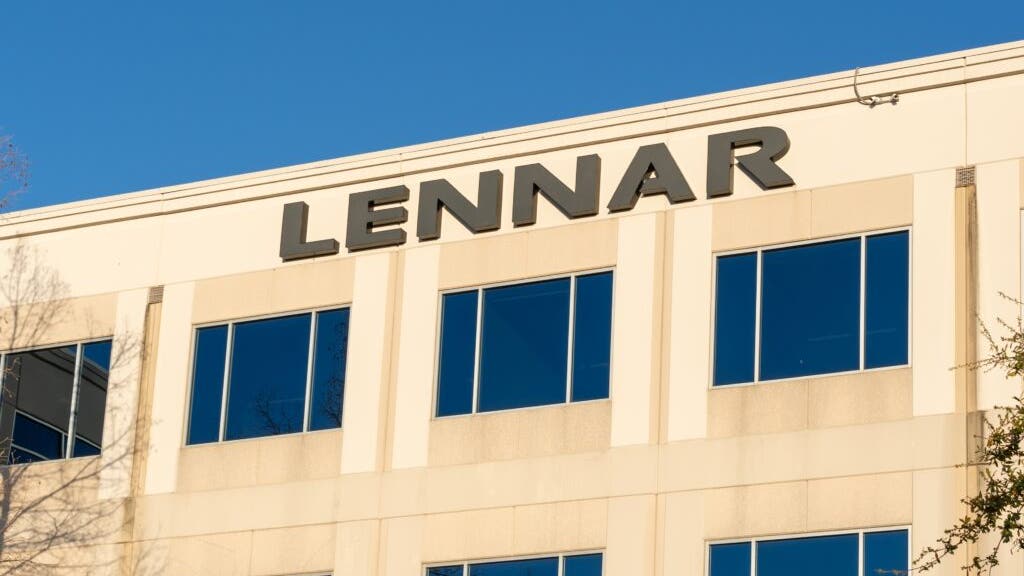
EXCLUSIVE: Lennar’s Big New Customer Is Its Own Spinoff, Millrose
Hunterbrook Media first reported that the nation’s second-largest homebuilder is selling houses to a company it created — and now that company is renting them out at a loss
In the final days of Lennar’s fiscal third quarter, as the homebuilder’s executives prepared to report earnings to Wall Street, something unusual was happening in subdivisions across the country. Deeds were being recorded at a furious pace, transferring ownership of newly built Lennar homes to a company called MRP Liberty LLC.
In Marion County, Florida, a house at 3770 NE 32nd Ct in Ocala sold for $224,743. In Pasco County, a home on Feaster Drive in Wesley Chapel fetched $409,300. In Princeton, Texas, dozens of properties changed hands. Across at least 51 counties in 15 states, more than 700 homes were transferred in roughly a month — an estimated $200 million in transactions that would ultimately swell to nearly $290 million across 1,096 deed records in 16 states.
The buyer, it turned out, was not a traditional investor or a family looking for a place to live. MRP Liberty LLC is a subsidiary of Millrose Properties, a real estate investment trust that Lennar had spun off just a year earlier. Millrose’s largest voting shareholder, with approximately 43% of the vote, is Lennar’s own CEO, Stuart Miller.
Hunterbrook Media first reported these findings, revealing a circular arrangement in which Lennar appears to be selling homes to itself — or at least to an entity it exercises significant control over — in a transaction that helped the struggling homebuilder meet its delivery guidance and may be masking the true state of demand for its products.
The implications extend beyond accounting technicalities. For families who purchased homes in these communities, the arrival of institutional rentals next door raises concerns about property values. For investors in both companies, the arrangement raises questions about whether Lennar’s reported sales figures reflect genuine market demand or financial engineering. And for Millrose shareholders, the economics of the rental business appear deeply unfavorable — with Hunterbrook’s analysis suggesting the company may be losing money on every home it rents.
A Round Trip Through Florida
The paper trail in Marion County, Florida, illustrates the circular nature of the transactions with unusual clarity.
In August 2024, according to county deed records, Lennar transferred ownership of 93 lots in the Millwood Estates development to Millrose Properties Florida, described in the deed as a “wholly owned subsidiary of the same owner.”
Over the following year, Lennar bought those lots back — at approximately $49,500 per lot — exercising option rights that Millrose had been created to provide. This was the land bank’s entire purpose: hold land so Lennar wouldn’t have to carry it on its balance sheet, then sell it back piece by piece as the homebuilder was ready to build.
By July 2026, Lennar had repurchased nine Millwood Estates lots, including Lot 290, for $445,106. The company built a house on the lot. And then, in August 2026, Lennar sold that finished home — 3770 NE 32nd Ct — to MRP Liberty LLC for $224,743.
The same property had cycled from Lennar to Millrose, back to Lennar, and then to Millrose again. The land bank had become a homebuyer.
This wasn’t supposed to happen. When Millrose was created in 2025, its filings with the Securities and Exchange Commission were explicit about its limitations. The company said it did “not, and will not, have any tenants or occupants on any of the properties” in its portfolio. Its properties were for holding land and financing development. “For the avoidance of doubt,” the filing added, those uses did not include “entering into any leases.”
That prohibition lasted less than two years.
The Amendment That Changed Everything
On August 27, 2026, Millrose and three Lennar subsidiaries signed an amendment to their Founder’s Rights Agreement. The companies added a new category of assets: “completed single family homes.” Millrose would buy these homes and operate them as rentals — exactly what the land bank had promised investors it would never do.
The same day, Millrose amended its management agreement to permit rental homes and to make Millrose, rather than its outside manager Kennedy Lewis, responsible for paying their operating expenses. Both changes were disclosed in exhibits to an 8-K dated September 1.
By the time the new agreements were signed, the buying had already begun.
An Arizona deed dated August 21 — six days before the amendments were signed — identifies MRP Liberty LLC as the buyer of a single-family home in Buckeye for approximately $1 million. Florida corporate registration records show that MRP Liberty’s sole member is Millrose Properties.
The purchases continued through the end of September. Hunterbrook’s analysis of county deed records identified at least 356 Millrose purchases in the final week of Lennar’s fiscal quarter alone. When Lennar reported third-quarter results on September 16, it beat the bottom of its delivery forecast by just 340 homes — the only one of five homebuilding targets it met. Without the sales to Millrose, Lennar would have missed that target too.
The company delivered 20,840 homes against guidance of at least 20,500. But orders, price, margin, and overhead all fell short of targets. The sales to Millrose were, quite literally, the difference between meeting and missing the delivery forecast.
Berkshire Hathaway’s Well-Timed Purchase
The day after Lennar’s earnings release, Berkshire Hathaway stepped up its buying of Lennar stock. Over the following days, Warren Buffett’s conglomerate purchased nearly $350 million worth of shares, pushing its stake past 10%.
Did Berkshire know that Lennar was selling homes to its own land bank spinoff? The storied investment firm did not respond to Hunterbrook’s request for comment. But it would be hard to blame Berkshire for missing the arrangement. Because this relationship isn’t described in Lennar’s footnotes — the kind of disclosure that Berkshire’s former leaders, Charlie Munger and Warren Buffett, were known for scrutinizing closely.
In fact, Hunterbrook could not find the new arrangement directly described in Lennar’s SEC filings at all.
“Why Are You Buying Your Own Homes?”
On Feaster Drive in Wesley Chapel, Florida, finished houses stand alongside homes still under construction in a Lennar development. At 9828 Feaster Drive, the garage stood open when a Hunterbrook reporter visited. A man emerging from the house said he worked for a property manager and had been cleaning inside. The house was for rent. He loaded his equipment into a white van marked “Homes for Lease.”
The house had been listed by Lennar for sale in April at $490,990, according to Zillow. By August, the asking price had dropped to $420,490. The listing was removed on August 14.
Pasco County deed records show that MRP Liberty bought the house in August for $409,300. It is now listed for rent at $2,825 a month.
The economics of this transaction are difficult to understand. If the house rents at the advertised price, Millrose would generate about $33,900 in annual rent on its $409,300 purchase. But after property taxes, insurance, and financing costs — assuming Millrose borrowed at the approximately 5.5% rate on its revolving credit line — the company would take home only about $3,100 per year. That’s a return of less than 1%, before HOA dues, maintenance, or vacancies.
The Pasco County house is not an outlier. Across the Millrose-owned homes Hunterbrook found listed for rent on Zillow, the company would earn little or nothing once expenses and borrowing costs are counted.
Finding tenants will take time, too. On September 29, a Hunterbrook reporter visited 36 addresses now owned by Millrose across four Lennar developments in Florida’s Marion County. None appeared occupied. Through windows, unfurnished rooms were visible. At several houses, notices hung from doorknobs.
The next day, a reporter visited 39 Millrose-owned homes in Princeton, Texas, where Millrose has purchased more than one in four homes Lennar has sold since late August, according to deed records. None appeared to be lived in. Most had no cars or trash cans outside. At one house on Sandpiper Lane, large spiderwebs stretched across the door. Only four of the 39 had a rental listing on Zillow as of October 1.
Andrew Baird, a Millwood Estates resident, mentioned that no one in his community has figured out yet that the institutional buyer is related to Lennar. “It’s just kind of a weird dynamic,” he said. “Why are you buying your own homes? Aren’t you supposed to be selling these?”
Kevin Franz, a homeowner in Prosperity Lakes in Manatee County, Florida, noted that Lennar appeared to be slashing prices to move inventory. “A lot of us are underwater now,” Franz said.
The Economics Don’t Work
Millrose discussed its rental-home program in a call summarized in a September 30 Goldman Sachs note to clients. Management described a small rent-to-own pilot for prospective buyers who cannot qualify for mortgages. Under the proposed model, Millrose would buy homes with signed leases already in place and credit part of tenants’ payments toward an eventual purchase.
But Hunterbrook’s reporting suggests that is not the business Millrose is actually operating.
Roughly a month after purchase, over 95% of homes Millrose bought from Lennar are advertised as available to the public for rent on the website of Evergreen, a rental management company Millrose has hired. Most listings show a move-in date ranging from “now” to mid-October.
That is not the business Millrose described to Goldman, where the lease is signed before the purchase closes. If tenants were already lined up, there would be no need to advertise the homes for rent.
When a Hunterbrook reporter contacted Evergreen about Millrose-owned homes, multiple call center representatives said Evergreen did not offer rent-to-own. They offered ordinary leases of 12 or 18 months instead. Hunterbrook found terms on over 50 Evergreen ads offering 12 months minimum.
When asked whether Millrose had really made these claims to Goldman, a Goldman analyst said: “I can’t talk to that,” and ended the conversation.
The financial picture is equally troubling. On the surface, the numbers seem acceptable: The rent Millrose is asking on Zillow adds up to about 8.4% of what it paid for the homes each year. That aligns with Millrose telling Goldman it has similar returns to its existing land banking business.
But 8.4% is the gross yield. Out of that, a landlord must pay property taxes, insurance, HOA fees, repairs, and management fees — which together add up to roughly 40% of gross rent, based on Hunterbrook’s review of margins disclosed at comparable businesses. That leaves about a 5% annual return.
And that’s before factoring in Millrose’s cost of capital. On September 22, Millrose priced new bonds at interest rates of 6.5% and 6.75%. Borrowing at those rates to buy homes yielding about 5% does not appear to be a money-making proposition.
Across nearly 1,000 Millrose homes put up for rent, the gross rent comes to 8.44% of the price per year. But after factoring in state-level taxes and insurance, proceeds to Millrose are more like 5.92% — below the 6.5% to 6.75% Millrose agreed to pay on its latest borrowing.
In Florida and Texas, where Millrose invested most heavily, the economics are worse. In Florida, where insurance on a $300,000 house reportedly averages $8,471 a year, the yield is 4.9% before financing costs. Only South Carolina and Alabama, which have the lowest property taxes of any state where Millrose bought, appear to exceed Millrose’s financing costs.
Other Landlords Are Selling, Not Buying
The environment in which Millrose has suddenly decided to start purchasing homes to rent is one in which other institutional landlords are heading for the exits.
American Homes 4 Rent, a leading industry player, said at a Bank of America-hosted real estate conference in September that homes it delivered in the second quarter yielded about 5.4%, and that it won’t underwrite new land below around 6%. The eight major institutional landlords were reportedly net sellers of 3,011 homes in the second quarter, five times as many as a year earlier.
Lennar’s largest peer, DR Horton, reported a 44% drop in sales to institutional landlords, according to a recent 10-Q. Invitation Homes, another large owner of single-family homes, has been selling its portfolio to fund share buybacks, vowing to continue as long as its shares trade at a discount to net asset value.
Millrose itself trades at a significant discount to NAV — yet it is buying homes at prices that appear to be above what other buyers are paying.
In the 47 Lennar communities where pricing information was available on public deed data, Millrose paid an average of $290,661 per home. That’s a few hundred dollars cheaper than what individual buyers in the same communities paid: $291,112 on average, weighted to match Millrose’s purchases.
But individual buyers also got incentives, which Lennar said averaged about 12% last quarter. Subtract those, and families effectively paid about $256,000. Assuming Millrose didn’t receive similar incentives, it paid roughly 13% more than individual buyers.
KKR-linked Slate, another institutional buyer of Lennar homes, paid about $263,000 on average compared to $277,000 Millrose paid across 15 communities where both companies purchased homes. Millrose paid about 5% more than another bulk buyer.
Why Would Millrose Do This?
The answer lies in Millrose’s dependence on Lennar — and Lennar’s ability to walk away.
As a real estate investment trust, Millrose must pay out at least 90% of its taxable income to shareholders. Lennar supplied 72% of Millrose’s revenue last quarter. Millrose has no employees and relies on an outside manager, Kennedy Lewis, selected by Lennar. Lennar CEO Stuart Miller holds approximately 43% of Millrose’s voting power.
If Lennar struggles to sell homes it has already built, it might have to slow down buying more land to build even more homes. In fact, it’s already slowing down. Lennar’s lot purchases from Millrose fell by a third between the December and June quarters. On Lennar’s September earnings call, Miller acknowledged that slower growth had stretched out Lennar’s land purchases, increasing the fees it pays while waiting to buy.
If Lennar can’t sell homes, it has two options: walk away from the land — forfeiting deposits, paying termination fees, and completing remaining land-development obligations — or pause purchases of new land from Millrose. The agreements let Lennar, in specified circumstances, do that.
Neither is a great outcome for Millrose. If Lennar pauses purchases, that cuts the affected monthly option payments to Millrose in half. If Lennar walks entirely, Millrose gets to keep deposits and fees, but faces finding new customers for those lots in a slow housing market.
Instead, by buying Lennar homes, Millrose can help ensure Lennar keeps the land and keeps paying fees on it. Lennar pays Millrose about $43 million a month to hold land, according to Millrose’s most recent report. Those payments continue until Lennar buys the lots or walks away.
“Protecting the customer” is a form of control Lennar is exerting on Millrose, according to JP Krahel, chair of Loyola University Maryland’s accounting department. He described the arrangement as having Catch-22 logic.
If Millrose is so dependent on Lennar that it must make irrational purchases, then Lennar controls it, he argued. And if that’s the case, accounting rules say Lennar should fold Millrose into its own financial statements, where sales between the two would cancel out. They would not count as revenue at all.
But if Millrose is independent enough to stay off Lennar’s books, it has no reason to buy houses that lose money, both Krahel and forensic accountant John McPherson said.
“Millrose seems to be acting against their own best interest,” said Krahel, “and why would they do that if they were an independent organization?”
McPherson, whose tip helped bring a successful SEC enforcement action, told Hunterbrook: “This is a tripwire that takes us from a gray zone to black and white.”
A Pattern of Conflicts
Millrose itself has warned investors about potential conflicts of interest. Because it had “no independent management or personnel before the spinoff,” its agreements with Lennar “have not been done at arm’s length,” the company disclosed to the SEC, and “there can be no assurance that Lennar negotiated the Management Agreement with Millrose’s best interests in mind.”
The terms, it said, “may be considered more favorable to Lennar than if Lennar had negotiated with a third-party land bank.”
And that was before Millrose started buying Lennar’s homes.
The ties between the companies run deep. In addition to Lennar being Millrose’s largest customer and Miller being its largest voting shareholder, Lennar’s influence runs through Kennedy Lewis, which has had a long relationship with the homebuilder. Lennar picked Kennedy Lewis to manage Millrose, and the ties between Kennedy Lewis co-founder Darren Richman and Lennar go back two decades.
Richman, now CEO of Millrose, once covered Lennar as a high-yield credit research analyst at Goldman Sachs. In 2021, Lennar and Kennedy Lewis began a land-banking partnership that Millrose’s investor presentation called a “deep-rooted relationship highlighted by their completion of $4.5B+ of land-banking transactions since 2022.”
Kennedy Lewis also served as Lennar’s unpaid strategic adviser on the structure, formation, and contracts of the Millrose spinoff. According to Millrose’s prospectus, “Lennar did not engage in a competitive selection process to evaluate KL against other potential manager candidates, including managers with relevant experience in managing public companies.”
Millrose has a separate board, whose directors it identifies as independent. But its policies give standing preapproval to the Lennar agreements and the transactions they contemplate. The August 27 amendment permitting the rentals refers to an “approved single family home rental strategy.” The filing does not say who, exactly, was behind that approval.
What Happens Next
The arrangement raises uncomfortable questions for both companies and their investors.
For Lennar, the sales to Millrose helped the company meet its delivery guidance in a quarter when it missed every other target. Net earnings fell 51% compared to the same quarter last year. Home sales revenue fell 6%. New orders dropped 9%. The average selling price slipped to $372,000 as incentives averaged about 12% of purchase price.
The company ended August with approximately $1.2 billion in homebuilding cash, down from $3.4 billion in November. Free cash flow was just $28 million in fiscal 2025 despite reporting $2.1 billion in profit — a discrepancy that reflects the cash drain of option fees piling up on lots still sitting in land banks.
For Millrose, the new rental business represents a dramatic departure from the land bank model it pitched to investors. The company told Goldman Sachs that builder discounts and eventual home sales should produce returns comparable to or better than land banking. But Hunterbrook’s analysis suggests the opposite: After taxes, insurance, and financing costs, Millrose may be losing money on the homes it rents.
The company also said the initiative originated inside Millrose, rather than with a builder. But the timing — with purchases beginning before the agreements permitting them were even signed — raises questions about who was really driving the strategy.
Neither Lennar nor Millrose responded to Hunterbrook’s repeated requests for comment.
For families in communities where Millrose is buying homes, the concerns are more immediate. A 2025 study of more than 9,000 homes bought by institutional investors around Charlotte, North Carolina found that neighboring home values fell about “2% within five years,” with more crime and far fewer building permits nearby. Another study, a Federal Reserve Bank of Philadelphia working paper released the same year, concluded single-family REITs modestly raised prices.
“I’ve been thinking about trying to sell, and I don’t even know if I could get what I put into it,” one Millwood Estates homeowner told Hunterbrook.
The homeowner spoke on condition of anonymity, worried about what institutional buying meant for home values. They had noticed more homes for rent in the community. They had watched Lennar sell houses back to Millrose after buying lots from Millrose months earlier.
They just didn’t know why.
This article is based on reporting originally published by Hunterbrook Media. Hunterbrook Capital is short MRP,shortMRP,shortLEN, and long a basket of comparable securities. Positions may change at any time. This article is not investment advice or any recommendation.