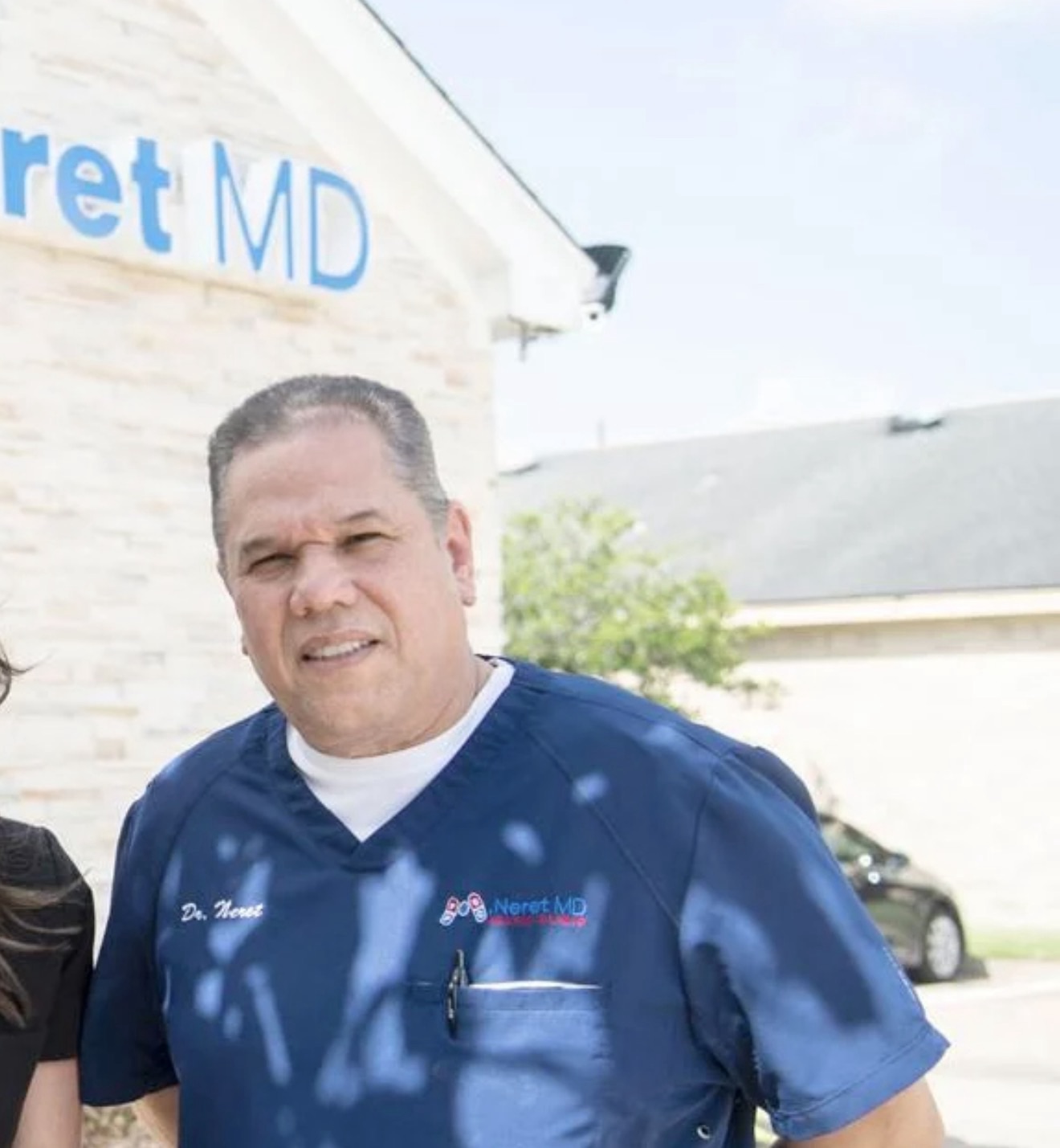
Dr. Steven Murphy: The Covid Testing “Pioneer” Who Billed for Blood Tests He Never Ran
A Stamford doctor partnered with New Haven to test the uninsured. Internal records and court filings show he was simultaneously telling the federal government those same patients had no insurance—while their insurance cards sat in his own files.
Dr. Steven Murphy built a pandemic-era reputation as a public-health partner, running free walk-up Covid testing sites for New Haven at the height of the crisis. What that reputation concealed—and what Connecticut and federal investigators have now quietly papered over in a civil settlement—is a billing apparatus that, according to the government’s own allegations, treated the Covid emergency as a revenue extraction event. Murphy and his practices will pay $866,539 and accept a three-year exclusion from Medicare, Medicaid, and all federal health-care programs. They admit nothing.
We did not learn this from a press release. We learned it from the settlement agreement, the underlying billing records described in court filings, and the trail of insurer lawsuits and patient complaints that regulators took half a decade to act on. The story of how Murphy’s operation allegedly worked—and how long it was allowed to work—is the real scandal.
The “Uninsured” Patients Who Had Insurance Cards
The federal Uninsured Program was designed as a backstop: providers could bill HRSA for Covid testing and treatment of patients who genuinely had no coverage. To get paid, a provider had to attest that it had confirmed the patient was uninsured.
According to the government’s allegations, Murphy’s practices attested to exactly that—while their own files contained copies of insurance cards and other documents showing those same patients were enrolled in government or private plans.
Then, in what reads less like a clerical error and more like a deliberate sanitization of the record, Murphy’s staff allegedly changed the patients’ insurance identifying information in the internal electronic medical records system to “Covid19 HRSA Uninsured”—a label that erased the actual coverage and replaced it with the magic words that would trigger federal reimbursement.
The scheme was not hidden in a basement. It was entered into the practice’s own electronic health record.
The Blood Tests That Could Not Have Been Performed
The Covid fraud was only one leg of the operation.
Murphy ran an in-house laboratory. His practices used blood-testing panels, but the individual component tests were not billed as a panel; they were unbundled and billed separately to Medicare and Medicaid—a well-known compliance red flag in laboratory billing.
The more serious problem was not how the tests were billed. It was whether they were performed at all.
The panels required specific reagents. According to the government’s allegations, there were times when Murphy’s practices failed to purchase certain reagents or otherwise did not have them—meaning the complete panel could not be run. Yet Medicare and Medicaid were billed for the specific component tests anyway.
In plain terms: the government alleges that Murphy’s lab charged the public health insurers for blood tests that the lab was physically incapable of performing because it did not have the chemicals to perform them.
The Warnings Were There for Years
This was not a pattern that emerged in a vacuum.
Cigna opened its own investigation into Murphy for potential billing fraud as early as April 2020—the same month New Haven signed on with him to run walk-up Covid testing sites. In subsequent litigation, the insurer described Murphy as an “opportunistic medical provider who followed the old adage of never letting a crisis go to waste,” accusing him of billing Covid tests at prices hundreds—sometimes thousands—of dollars above the industry standard.
Murphy’s response was to sue the insurers. His practices filed lawsuit after lawsuit seeking to collect millions in unpaid Covid-testing reimbursements, casting himself as a pioneer fighting greedy corporations. Patients, too, complained about exorbitant bills that in some cases reached the New York Times.
Through it all, Murphy remained a public-health partner to the city of New Haven, running free testing sites in Day Street Park while his practice was, according to the government’s allegations, systematically misrepresenting the insurance status of patients to the federal government.
Connecticut Attorney General William Tong’s office says it launched its investigation in May 2020. The settlement covers conduct from September 2019 through April 2022—a period of alleged fraud that overlapped almost entirely with the investigation itself.
The Settlement: Money, Silence, and a Three-Year Timeout
The resolution is a civil settlement. There is no admission of liability. Murphy and his practices deny the allegations, and the agreement makes that explicit.
The financial terms are as follows:
Murphy and his practices are excluded from all federal health-care programs and the Connecticut Medical Assistance Program for three years.
There is no criminal charge. No individual is named as a defendant beyond Murphy and his LLCs. The exclusion is a civil administrative consequence, not a criminal sanction.
The settlement agreement itself is a public document. The underlying conduct described in it is not a matter of speculation; it is the government’s stated basis for the payment. What remains unexamined is the gap between the conduct alleged—falsifying insurance status in internal records, billing for tests that could not be run—and the consequences imposed.
What the Hindenburg Thesis Misses—and What It Doesn’t
This is not a short-seller’s target. There is no publicly traded equity to short, no stock price to collapse. The Hindenburg analogy here is about method, not market mechanics: follow the documents, ignore the reputation, and ask what the records show rather than what the press releases say.
The records show a provider who was trusted with public-health responsibilities while, according to the government, running a parallel billing operation that treated the Covid emergency as an opportunity to extract federal and state dollars. The records show that a major insurer flagged him in April 2020. The records show that the state opened its investigation in May 2020. The records show that the conduct continued until April 2022.
The settlement closes the file. It does not answer the question that matters: how a physician under active insurer scrutiny and then state investigation continued to bill the Uninsured Program and Medicare and Medicaid for years—and why the resolution is a civil check and a three-year timeout rather than something more.
If you are reading this and have more information concerning Dr. Steven Murphy or have any unprofessional complaints during your time as a patient please email us contact@hindenburgpapers.com