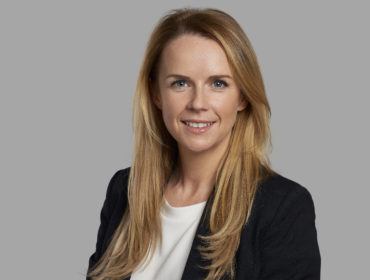
PART IV — THE GATEKEEPER: Melanie Omirou, the £1.2m House, and the Funding Machine Behind Acorn
She was the person who arranged the money. She sat at the head of the board. She controlled which projects were funded, on what terms, and from whose pockets. And while subcontractors went unpaid and investors waited for redemptions that never came, the public record shows that Melanie Omirou bought a £1.2 million house in North London — and sources allege that she and her husband did so with the proceeds of the very machine that is now collapsing around Acorn’s victims.
The person nobody was looking at
The Hindenburg Papers investigation into Acorn Property Group focused, rightly, on the founder. John Mirko Skok is a convicted mortgage fraudster. He pleaded guilty at Southwark Crown Court in 1994 to conspiracy to defraud in a multi-million-pound mortgage fraud involving nearly 60 properties. He built a £300 million loan-note machine on top of that conviction, and the Financial Conduct Authority has warned about Acorn’s investment arm at least five times since 2008.
But Skok did not arrange the funding. He did not negotiate the mezzanine terms, decide which projects got investor money, or set the security that was offered to the people who bought the loan notes.
That was Melanie Omirou.
For more than two decades, Omirou has been the financial engine of Acorn Property Group. She joined as a funding assistant and development manager, rose to Executive Group Managing Director, and describes herself as “head of the Board of Directors”. In a 2022 interview with Simple Crowdfunding, she was explicit about her role:
“I’ve been in my current role for ten years, focusing on procuring and managing funding for all Acorn site purchases and their development. I’ve raised funding for a wide range of different projects across London and the South West”.
On her LinkedIn profile, she states: “I am in charge of arranging all the funding for ACORN”.
This is not a peripheral executive. Omirou is the gatekeeper. When Acorn Property Invest raised money from retail investors, Omirou decided how the mezzanine finance would be structured — whether it came from the fixed-income portfolio or directly from investors in the project. She decided the required margin. She decided the type of security. She decided the rate of return that would be offered to the victims.
“For Acorn Property Invest my day-to-day role involves working with our Finance and Land teams to determine the best funding structure for each project,” she said. “We look at a range of commercial decisions, such as the likely duration of any elements requiring funding, before deciding whether the mezzanine finance should come via Acorn Property Invest and if so, whether it should come from investors in our fixed-income portfolio or directly from investors in the project”.
If the Acorn loan-note machine was a pump, Omirou was holding the handle.
The scale of the apparatus: hundreds of appointments
Omirou’s centrality to the operation is not simply a matter of job title. It is written into the corporate architecture of Acorn itself. Companies House records show that Melanie Jayne Omirou has been appointed as a director of hundreds of companies across the Acorn group over the course of her career — estimates from corporate data providers put the figure at over 500 appointments. Romy Summerskill, Acorn’s co-founder and Executive Chairman, has accumulated an even larger number: one corporate data provider records 569 appointments in her name.
These are not passive directorships. They are the SPVs — the special purpose vehicles — through which Acorn buys land, raises money, builds developments and, increasingly, liquidates. Each company is a separate legal entity. Each one can raise its own loan notes. Each one can be placed into administration or liquidation independently of the others. And the same small group of people — Omirou, Summerskill and Skok — sit at the centre of almost all of them.
This is the structure that makes the Acorn model so difficult for creditors to unpick and so effective at insulating the people at the top from the consequences of failure at the bottom. If one SPV collapses, the parent is not liable. If investors want their money back, they must pursue the individual company — which may have no assets left. If the assets were stripped before liquidation, the paper trail leads to a shell.
The person who knew which shell held which assets, which project was being cross-subsidised by which investor’s money, and which invoices were being prioritised over others was the funding director. Melanie Omirou.
The £1.2 million house
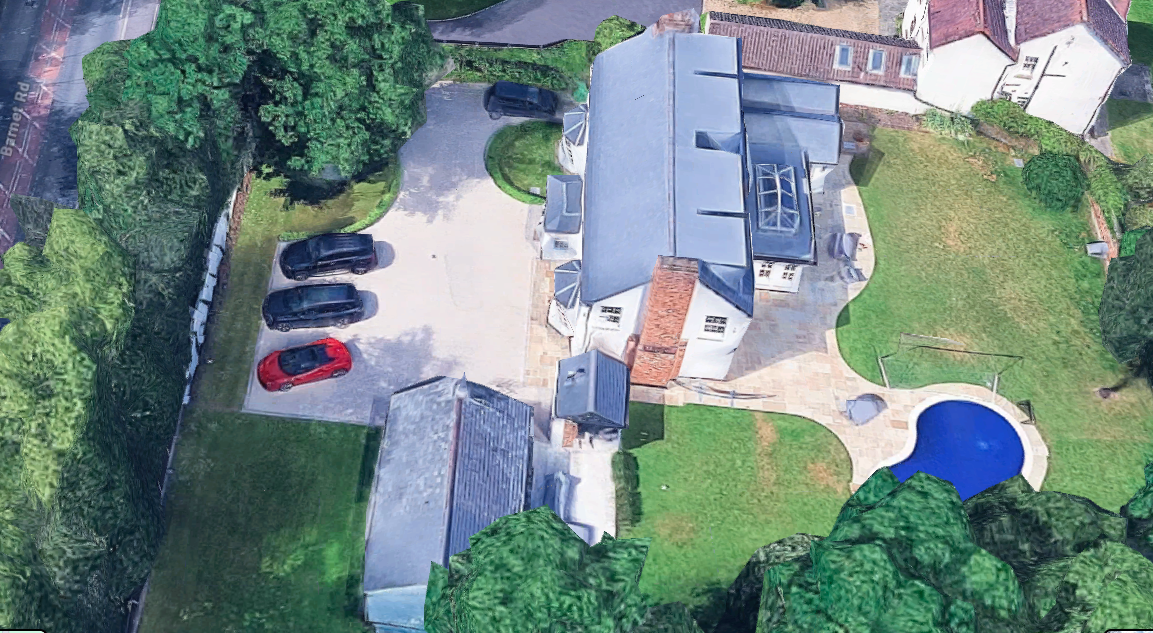
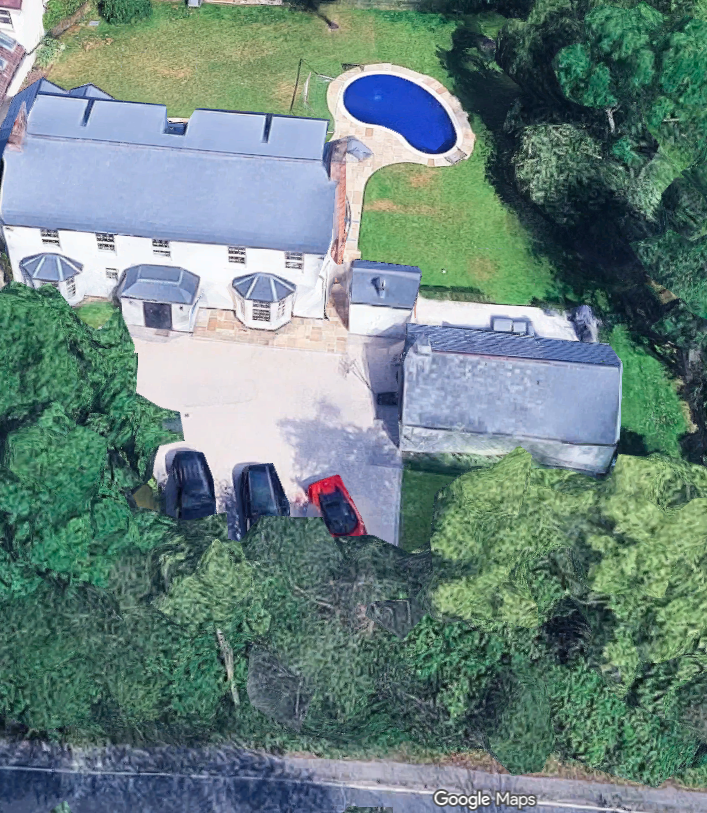
On 11 April 2014, a property called Ivy House on Barnet Road in Barnet, EN5 — a five-bedroom detached house — was sold for £1,200,000. The Land Registry record is public. The sale date is public. What is not public is where the money came from.
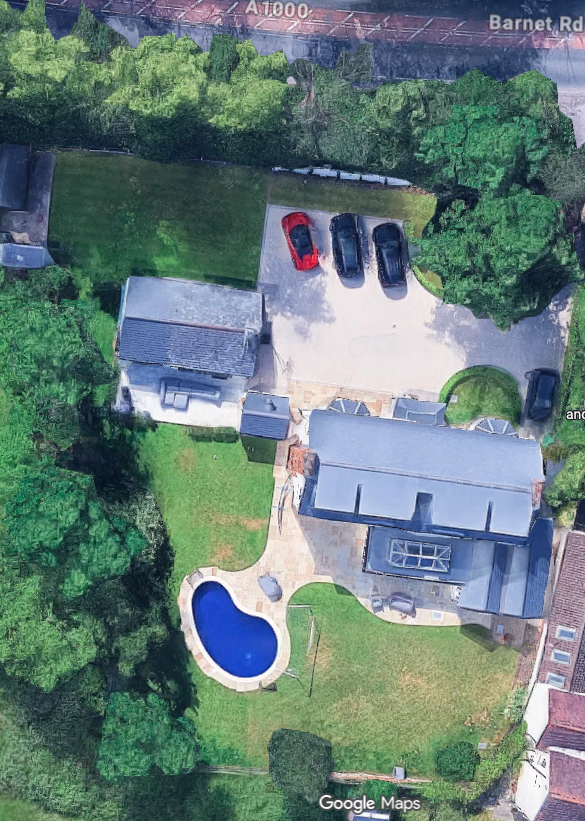
Sources familiar with the family’s finances allege that Melanie Omirou and her husband bought the house with the proceeds of the Acorn funding operation — the same operation that is now the subject of liquidations, FCA warnings, and investor complaints. The timing is, at the very least, uncomfortable. In 2014, Acorn was expanding aggressively. It had opened offices in Newquay, Bristol and Cardiff. It was laying the groundwork for Acorn Property Invest, the unregulated fundraising arm that would later be warned by the FCA. And the person in charge of arranging all of that funding was buying a £1.2 million house in one of North London’s more desirable postcodes.
The allegation that the house was bought with the proceeds of a Ponzi-style operation is serious and disputed. Acorn has consistently denied wrongdoing. But the question that investigators, creditors and investors are entitled to ask is a simple one: if the funding machine was solvent, if the ringfenced money was ringfenced, and if the projects were properly financed, where did the personal wealth come from?
The public record does not answer that question. The whistleblowers do.
The chain of command: Skok’s orders and Omirou’s complicity
The insider account does not merely describe Omirou as a functionary. It describes a chain of command in which John Skok and his wife, Romy Summerskill, set the direction — and Omirou executed it.
Skok and Summerskill are described as handing out orders. They were treated, in the insider’s words, “like deities” by staff, and people who questioned too much usually found themselves pushed out of a job. Omirou, as the day-to-day chief executive and the person who controlled the funding, was central to everything that happened. She was not on the periphery. She was in the room where the decisions were made.
This raises a question that goes to the heart of any future criminal or regulatory investigation: was Melanie Omirou a participant in the fraud, or was she a knowing enabler who played along while also profiting from the scheme?
There is no middle ground that is comfortable for her. If she knew that ringfenced investor money was being used to pay invoices for unrelated projects — as the insider alleges — and she did nothing to stop it, she was complicit. If she knew that bank drawdown payments were being diverted and that assets were being stripped before liquidation — as the insider alleges — and she continued to sign off on the funding structure, she was complicit. If she knew the true state of the balance sheet while investors were being told their money was secured, and she allowed the marketing to continue, she was complicit.
The alternative is that she knew all of their dirty secrets and was playing along — gaining and profiting from the scam while maintaining the outward appearance of a respectable executive. The £1.2 million house, the luxury cars, the lifestyle: these are the fruits of the machine. The question is whether she was merely an employee following orders or a beneficiary who understood exactly what she was doing.
The insider’s account does not settle that question definitively. But it places Omirou at the centre of the machinery, not at its edge.
The lifestyle allegations
The insider account describes a culture of personal enrichment that ran parallel to the financial distress of the operating businesses.
John Skok and his wife live on a large property on the fringes of Hampstead Heath, furnished and maintained by Acorn staff. The company’s technology director reportedly handles their tech installations and manages their security. They owned a penthouse in Newquay, which was sold after Covid to fund the business, along with other Newquay properties used as holiday and private rentals. Skok drove a Bentley Continental and a Mercedes GLS; the Bentley was sold during Covid. The family took expensive foreign holidays throughout the year and furnished their properties to the highest standard.
Separately, sources allege that John Skok and his wife privately educate their daughter in Highgate, one of London’s most expensive private-school catchments. The fees would run to tens of thousands of pounds a year. At the same time, the insider says, subcontractors and vendors in Cornwall were not paid, council debts went unpaid, and staff were made redundant without redundancy payments.
And the insider alleges that Melanie Omirou and her husband bought luxury cars with money that should have gone to creditors — part of a broader pattern of personal enrichment at the expense of subcontractors, councils and investors. No public record confirms the specific vehicle purchases. But the allegation fits the timeline: Omirou was the funding director throughout the period in which Acorn’s loan-note machine expanded, and she remains the executive group managing director after the November 2026 management buyout.
These are not victimless accounting decisions. They are choices about who gets paid and who does not.
The Cornwall collapse: “There was no money”
The insider’s account of Acorn Blue, the group’s Cornish brand, is the most detailed part of the testimony — and much of it is corroborated by the public record.
RST Constantine Bay Homes Ltd — an Acorn Blue offshoot that redeveloped the former Treglos Hotel site — was declared insolvent in October 2024. It owed £1.2 million to Cornwall Council alone. The insider alleges that before liquidation, the company was stripped of assets in payments to the directors themselves. Council debts and subcontractor invoices were left unpaid. The liquidators’ records show the company had £780 in cash and negative equity of £2.2 million.
The insider alleges a wider pattern across the Cornwall projects:
- Bank drawdown payments were rarely paid in full to project accounts, meaning invoices could not be paid.
- Bank funding “mysteriously disappeared” on all projects.
- Funding was diverted from one project to another to cover invoices.
- Investor money from ringfenced projects was used to pay invoices for completely unrelated projects.
- While invoices went unpaid, the board in London flew to Dubai to play golf with potential investors.
- The banks have taken over all three Acorn Blue projects in Cornwall — the former Marks & Spencer site in Falmouth, Pentire in Newquay, and a third project — because the projects ran out of money.
- Staff were not paid and did not receive redundancy money.
- The company was sued by a subcontractor for slander and settled before trial to keep it out of court.
- Projects were run while the “businesses” were insolvent, at one point owing around £1 million with no way to cover the debts.
The public record corroborates the shape of this account. Acorn Blue paused its scheme to convert the former Marks & Spencer store in Falmouth into flats in spring 2026, prompting rumours that the project had run out of cash. It then paused a second Cornwall project — the former Hotel California site on Pentire Crescent in Newquay — in August 2026. Acorn denied it had run out of money or collapsed. But two paused projects, a liquidated Constantine Bay SPV, and a £1.2 million council debt are not the hallmarks of a business that was ringfencing investor money and paying its bills.
The insider’s account also explains why the Bluewater Capital charge over RST Group Holdings matters. Bluewater was the security trustee. It held a fixed and floating charge over the parent company from 26 September 2019. If investor money was being cross-subsidised between projects, if bank drawdowns were not reaching project accounts, and if assets were being stripped before liquidation, then the security that Bluewater was holding was securing a shell — not the assets investors believed they were lending against.
The Galliard relationship: the helicopter and the joint venture
The insider also provided a piece of corporate history that helps explain how Acorn grew so quickly despite its founder’s conviction.
In the 1990s, John Skok met Stephen Conway, the founder of Galliard Homes, at property auctions. According to the insider, they reached an agreement: Skok would take the smaller development projects, Galliard would take the larger ones, and Galliard would support Acorn’s projects through funding and joint ventures. The agreement was still in effect at the time of the insider’s account.
This is not a conspiracy theory. It is corroborated by Acorn’s own lending partners. United Trust Bank’s profile of Acorn Blue’s Dunes development in Perranporth states plainly: “The Dunes is one of several exciting joint ventures Acorn Property Group is undertaking with Galliard Homes”. Galliard’s scale and balance sheet gave Acorn credibility. Acorn’s local knowledge and pipeline gave Galliard access to smaller sites. The relationship was mutually beneficial.
The insider is careful not to allege that Galliard is “dodgy” or that it knew about Skok’s conduct. But the insider does describe the culture of impunity that surrounded the Galliard circle. Stephen Conway, one of Britain’s wealthiest property developers, reportedly used a helicopter to visit sites when Galliard was a joint-venture partner on some Acorn projects. The insider alleges that the helicopter’s arrival was not notified to helipads, despite this being illegal, because the owner was so wealthy that the fines meant nothing to him.
That detail is not evidence of financial wrongdoing. It is evidence of a milieu — a world in which the normal rules of paperwork, notification and accountability were treated as optional by people with enough money. Acorn’s directors moved in that world. They were treated, in the insider’s words, “like deities” by staff, and people who questioned too much usually found themselves pushed out of a job.
The gatekeeper and the trustee
The Bluewater Capital relationship now looks different in light of Omirou’s role.
Bluewater was the security trustee. It held the charge over RST Group Holdings. But Omirou was the funding director. She was the person who structured the mezzanine finance, decided which investors’ money went into which project, and managed the joint ventures with banks and high-net-worth individuals. If the money was being diverted, cross-subsidised or stripped out, the funding director is the person who would have known.
The question for Bluewater is not whether it held a valid charge. It did. The question is whether it conducted adequate due diligence on a borrower whose funding director was operating a complex, multi-SPV structure in which investor money was allegedly being used to plug holes in unrelated projects. A security trustee’s job is to hold security. But if the security is over a parent company whose subsidiaries are being liquidated one by one, and if the money that was supposed to be secured has already been spent, the charge is a document, not a recovery.
The FCA authorised Bluewater. The FCA warned about Acorn’s investment arm repeatedly. The two facts sat side by side for years. Nobody joined the dots.
The buyout: the management becomes the owner
In November 2026, Acorn Property Group announced a “comprehensive restructuring” and a management buyout that promoted “key staff to equity owners of the business”. Melanie Omirou, executive group managing director, fronted the announcement. She spoke of a “fundamental shift” in the market, of “prolonged deterioration” in development economics, and of the need to “reassess almost everything about the way we operate”.
She did not mention the investors who are still waiting for their money. She did not mention the subcontractors who were not paid. She did not mention the £1.2 million owed to Cornwall Council, or the Constantine Bay liquidation, or the FCA warnings, or the Bluewater charge that sat over the parent company.
What the buyout means is that the management team — including Omirou — now owns a larger share of whatever survives. The victims of the loan-note machine do not. They are creditors of liquidated SPVs. The management has equity in the restructured group. That is the phoenix pattern: the people who ran the business into the ground are the people who get to keep the viable parts, while the creditors are left with the shells.
The insider’s account of Cornwall — assets stripped, invoices unpaid, staff made redundant without redundancy pay, money diverted between projects — is the mechanism by which that outcome was achieved. The £1.2 million house, the luxury cars, the private education, the Hampstead Heath property maintained by company staff: these are the visible traces of a funding machine that took money in from investors and distributed it upwards, while the liabilities were pushed downwards onto subcontractors, councils and staff.
The unanswered questions
The investigation into Acorn Property Group has, until now, focused on John Skok. That is understandable. He is the founder, the convicted fraudster, the public face of the £300 million loan-note machine.
But the money did not arrange itself. Melanie Omirou arranged the money. She was the funding director for more than a decade. She sat at the head of the board. She decided the terms on which investors’ money was raised, the security they were offered, and the projects it was used for. She held hundreds of directorships across the Acorn group. She remains the executive group managing director after the buyout.
The questions that now need answering are these:
- What did Melanie Omirou know about the diversion of ringfenced investor money between projects? The insider alleges it happened routinely. If it did, the funding director was at the centre of it. Was she a participant in the fraud, or a knowing enabler who profited while playing along?
- How was the £1.2 million house in Barnet financed? The Land Registry record shows the purchase in April 2014. The public record does not show the source of funds. The allegation that it came from the proceeds of the Acorn funding operation has not been tested in court. It should be.
- What due diligence did Bluewater Capital conduct on Acorn’s funding structure? Bluewater held the charge over RST Group Holdings. Did it know that the parent company was balance-sheet insolvent? Did it know that the money was being cross-subsidised? Did it ask?
- Why were staff and subcontractors left unpaid while the directors’ lifestyle continued? The insider’s account alleges payments to the directors themselves before the Constantine Bay liquidation. The liquidators’ records show £780 in cash and £2.2 million of negative equity. Where did the money go?
- What does the management buyout mean for creditors? The management team now owns equity in the restructured business. The creditors own claims against liquidated SPVs. Is that a legitimate restructuring, or a phoenix?
Acorn denies wrongdoing. The FCA warnings are warnings, not findings of fraud. The insider’s allegations are allegations, not proven facts. But the pattern is now too consistent to ignore: the same funding director, the same security trustee, the same cluster of collapsed SPVs, the same unpaid creditors, and the same management team emerging with equity while the victims are left with paper.
The name on the door was Acorn. The money was arranged by Melanie Omirou. The security was held by Bluewater. And the people who are owed money are still waiting.